
8 Must-Ask Questions Before Hiring a Flooring Company (No Matter Who You Choose)
Choosing a flooring company can feel overwhelming. Flooring is a big investment. It disrupts your home. And once it’s installed, you live with the results every day.
What many homeowners don’t realize is how much flooring companies can differ. The difference isn’t just price or product. It’s who does the work, what prep is included, how problems are handled, and what happens if something goes wrong months—or even years—later.
Too often, people compare price or showroom selection. Then the installation starts, and surprises follow. Delays happen. Costs change. The final result may not match expectations.
While researching flooring companies in our area and reading real homeowner experiences, one thing stood out. The best results didn’t come from the lowest price. They came from homeowners who asked the right questions before hiring anyone.
After four decades of flooring projects, our company has seen installs go smoothly. We’ve also seen problems that could have been avoided with one or two clear conversations upfront. The truth is simple: the right questions tell you more about a flooring company than a quote ever will.
If you’re wondering what questions you must ask a flooring company before hiring, the answers below will help you compare installers, avoid surprise costs, and choose with confidence.
In this article, you’ll find eight important questions every homeowner should ask before hiring a flooring company. These questions cover installation, preparation, warranties, timelines, pricing, and project details—so you can move forward with confidence.
Must-Ask Question 1: Who Will Be Installing My Flooring? (and Is the Flooring Company Responsible?)
Ask whether the installers are employees or subcontractors. More importantly, ask who is responsible if something needs to be fixed after the job is done.
Many flooring companies use subcontractors, and that alone isn’t a problem. What matters is the relationship behind the scenes. When a company works with the same installers for years, they know the quality of their work and can stand behind it if a repair is needed.
Problems can arise when installers are new or loosely connected to the company. If that installer is no longer available, homeowners may be left unsure of who handles the repair. That’s why it’s important to get clear answers upfront about who you’ll call if something goes wrong later—and whether the company will stand behind the installation regardless of who did the work.
Must-Ask Question 2: What Preparation Is Included in a Flooring Installation Quote—and What Costs Extra?
Flooring rarely goes straight over the existing surface without some prep. The condition of the subfloor plays a major role in how well your new floor performs over time.
Ask what preparation is included in the quote, such as removing old flooring, checking the subfloor, testing for moisture, or leveling uneven areas. Just as important, ask what is not included and would cost extra.
This question matters because prep work is one of the most common areas where expectations and pricing break down. Understanding what’s included upfront helps prevent surprise charges once the project is underway.
Must-Ask Question 3: What Warranties Are Included—and Who Handles Them?
Most flooring projects come with more than one warranty. There is usually a manufacturer’s warranty on the flooring itself and a separate workmanship warranty on the installation.
Ask what each warranty covers, how long it lasts, and who you contact if an issue comes up. Some problems fall under product defects, while others relate to installation, and knowing the difference matters.
Clear warranty answers help you understand where you’re protected—and avoid being passed back and forth between the store, the installer, and the manufacturer later.
Must-Ask Question 4: How Do You Handle Unexpected Issues During Flooring Installation?
Many flooring estimates are based on what can be seen before the old flooring is removed. Once demolition begins, hidden issues such as moisture damage, uneven surfaces, or soft spots in the subfloor may appear.
This is where experience matters. A knowledgeable estimator will look for warning signs during the initial visit, not just measure the space. Still, some issues can’t be fully confirmed until the old flooring is removed.
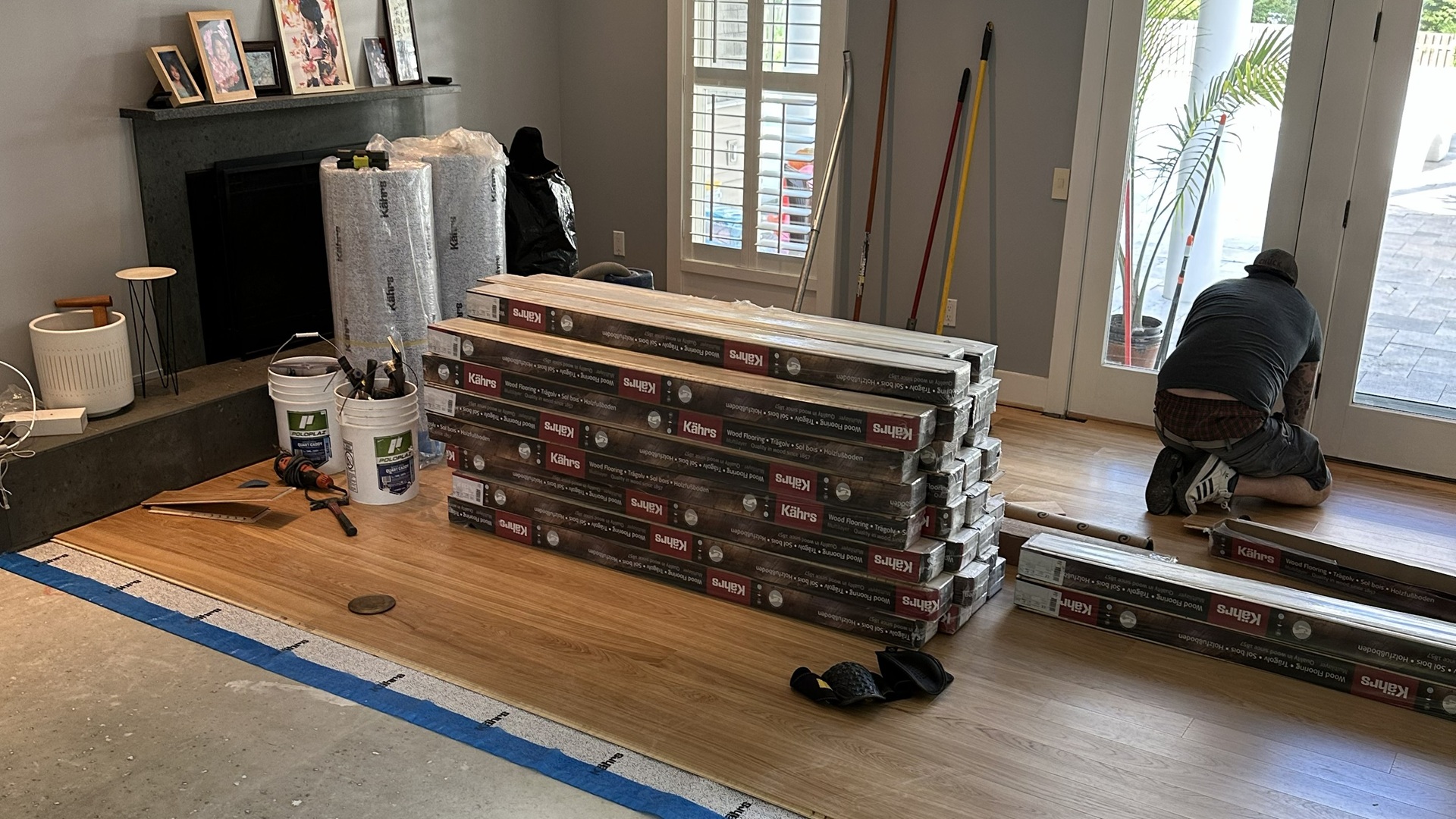
A view of the subfloor and prep work as we transform a local living room with new LVP flooring.
Ask how the company handles these discoveries. Will they explain what was found and why it matters? How are added costs approved and communicated before work continues? Knowing this ahead of time helps you avoid stress and rushed decisions mid-project.
Must-Ask Question 5: What Is the Expected Timeline—and What Could Delay It?
Flooring projects affect daily life more than most home upgrades. Knowing the timeline helps you plan for noise, dust, furniture movement, and time away from certain rooms.
Ask how long the project is expected to take, when materials will arrive, and what factors could cause delays. Weather, material availability, subfloor conditions, and schedule changes can all impact timing.
Clear timelines help set realistic expectations and reduce frustration if plans need to shift.
Must-Ask Question 6: What Maintenance Will My New Floor Need?
Different flooring types have very different care requirements, and following the wrong advice can shorten the life of your floor—or even void the warranty.
For carpet, ask how often professional cleaning is required. Most manufacturers require carpet to be professionally cleaned about every 18 months to keep the soil and stain warranty valid. It’s also important to use the right vacuum. Some newer, high-powered vacuums are too aggressive for today’s softer carpets and can actually pull out fibers over time. A vacuum designed for soft carpet makes a big difference.
For hard surface floors, cleaning methods matter just as much. Never use a steam mop on luxury vinyl plank (LVP) or laminate flooring. Steam can force moisture into seams and joints, leading to swelling, damage, and warranty issues. Ask which cleaners are safe, which to avoid, and how often routine maintenance should be done.
This question matters because proper care protects your investment. Knowing the right maintenance upfront helps your floor look better, last longer, and stay covered under warranty.
Must-Ask Question 7: How Is Flooring Installation Priced—and What Could Change the Cost?
Not all flooring quotes are built the same, and a lower price at first glance doesn’t always mean a lower final cost. Some companies keep their initial installation quote lean to avoid sticker shock, which can make their price look more attractive at first.
In those cases, items like floor prep and leveling may be left out and addressed later, once the project is already underway. A reputable flooring company aims to be upfront about pricing from the beginning, even if the quote appears higher at first, so you can understand the full scope of the work.
Ask what the installation price includes, what it doesn’t, and what situations could change the final cost. Clear pricing upfront makes it easier to compare quotes and helps prevent frustration once work begins.
Must-Ask Question 8: Can You Share Examples of Similar Projects?
Project complexity affects both cost and timeline. Stairs, patterned carpet, herringbone layouts, custom cuts, or unusual room shapes require more skill and experience.
If your project includes any of these, ask to see examples of similar work. This helps confirm the installer has the right experience and that the pricing matches the scope of the project.
Final Thoughts Before You Hire a Flooring Company
Choosing a flooring company isn’t just about price or product. It’s about understanding how the work will be done, what’s included, and how problems are handled when real life happens.
If you feel cautious, that’s normal and smart. Flooring projects affect your home, your time, and your budget. Many problems don’t appear until work is already underway. By asking these questions before hiring a flooring company, you put yourself in control of the process—not the installer.
Your next step is to compare how different companies answer these questions. Pay attention not just to the answers, but to how clearly and confidently they are explained.
At Floor Concepts, we believe informed homeowners make better decisions—whether they work with us or another professional. Our goal is to help you understand the process, ask better questions, and feel confident about your flooring choices. Our flooring experts are always happy to help. Fill out our online form today for a no-obligation consultation.