Why does choosing kitchen flooring feel so confusing, even when you think you’re doing everything right?
If tile is “always best,” why do some kitchens feel cold and uncomfortable? If luxury vinyl is “perfect,” why do some floors still scratch, dent, or fail too soon? And if hardwood looks so good in photos, why do so many Wilmington homeowners regret it once humidity and spills take their toll?
There is no single “best” kitchen floor. But there is a best option for your Wilmington home, your lifestyle, and your expectations.
At Floor Concepts, we’ve been helping Wilmington homeowners choose and install kitchen flooring for over 42 years. We’ve seen what holds up in our humid climate, what struggles over time, and what homeowners wish they had known before making a decision. This guide breaks down the best kitchen flooring options for Wilmington homes. It will help you choose a floor that fits how you actually live—not how it looks online.
Wilmington’s proximity to rivers, canals, and coastal air means higher humidity for much of the year. That moisture doesn’t stay outside. It moves through crawl spaces, foundations, and indoor air, affecting flooring materials over time. Seasonal temperature changes add another layer of movement and stress.
Kitchens already deal with spills, splashes, and daily messes, so flooring here needs to be more stable and moisture-resistant than in other rooms. This is why some floors that perform well in other parts of the country don’t always behave the same way in Wilmington homes.
Beyond climate, kitchens are harder on floors. They’re high-traffic spaces where chairs slide, appliances sit heavy, and families, pets, and guests move through. Sometimes all at once. The right kitchen floor needs to handle daily wear without showing it too quickly.
Style also matters. Wilmington homes range from historic properties to newer builds, and kitchen flooring should complement the home’s character. At the same time, many homeowners think ahead to resale. Durable, easy-to-maintain flooring that feels cohesive with the rest of the home often appeals to future buyers as well.
Some flooring materials consistently perform better in Wilmington kitchens when matched to the homeowner’s lifestyle and expectations.
Luxury vinyl plank has become the most popular kitchen flooring choice for many Wilmington homeowners, and for good reason. LVP offers a balance of durability, moisture protection, and ease of care that works well for how most families use their kitchens.
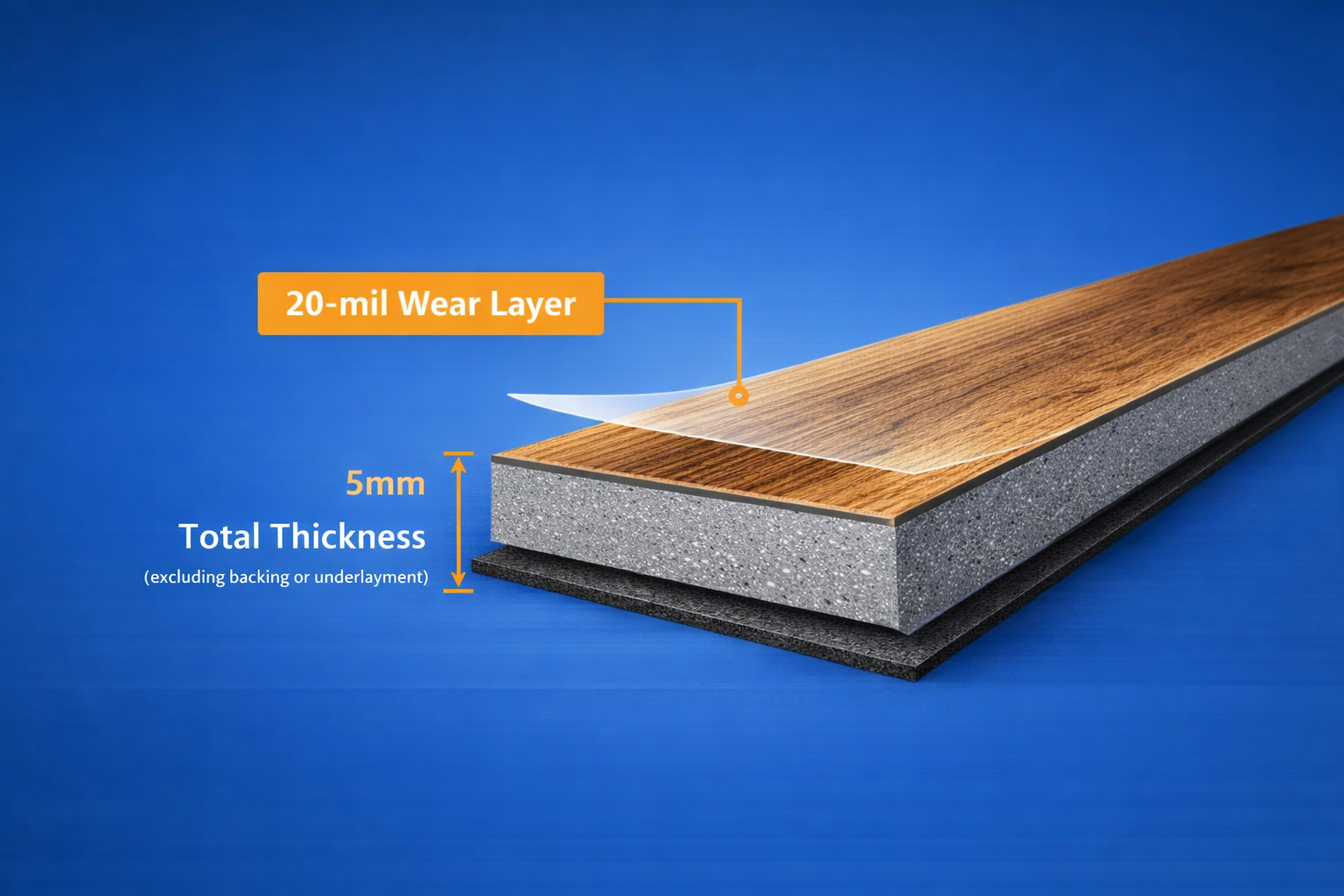
When a well-made product is chosen, LVP handles spills, heavy foot traffic, and daily wear with ease. A key factor is the wear layer, the clear top layer that protects against scratches and dents. For kitchens, a wear layer of at least 20-mil provides the durability needed to withstand appliances, pets, and everyday use.
The total thickness of the plank matters as well. A quality LVP plank should be at least 5 millimeters thick, not including the attached backing. Thicker planks tend to feel more solid underfoot, reduce noise, and perform better over time, especially in busy or open-concept kitchens.
LVP appeals to households with kids, pets, or frequent entertaining because it offers the look of wood with far less maintenance and better moisture protection. Like any flooring, long-term performance still depends on choosing the right product and having it installed properly.
Tile has long been a trusted kitchen flooring choice and remains a strong long-term option for many Wilmington homeowners. Ceramic and porcelain tile are durable, water-resistant, and easy to clean, making them well-suited for kitchens.
Tile holds up to heavy foot traffic, resists heat and stains, and creates a sanitary surface that doesn’t trap moisture or odors. From a design standpoint, tile offers flexibility. It can feel classic and traditional or clean and modern depending on size, color, and pattern.
There are tradeoffs. Tile is a hard surface and can feel cold underfoot, though many homeowners use floor mats or install radiant heat for comfort. Tile is also less forgiving than other materials. Heavy impacts can cause cracks, and grout requires periodic cleaning and sealing.
While tile itself can be reasonably priced, installation is often the biggest investment. Tile installation can cost significantly more than other flooring options. When installed properly, however, tile can last for decades, making it a one-time decision for homeowners who value durability and longevity.
Solid hardwood remains a desirable option for high-end kitchens and homeowners who value natural materials and timeless character. When everything is done correctly, it can be a beautiful choice—but it’s best understood as high risk, high reward.
Wood is a living material, and Wilmington’s humidity requires careful management. Solid hardwood expands and contracts as humidity changes, and kitchens add moisture to the mix. Plank width plays a major role. Wide planks (5 inches or more) are more prone to movement, while planks under 4 inches tend to perform more reliably in this climate.
Consistent indoor humidity control is essential. Maintaining relative humidity between 35–55% and stable temperatures year-round helps reduce the risk of gaps or cupping. Solid hardwood is best suited for homeowners who are committed to maintenance and understand the responsibility that comes with it.
Engineered hardwood offers the look and warmth of real wood with greater stability than solid hardwood. Its layered construction helps it handle humidity changes more effectively and allows for wider plank designs.
Because many manufacturers offer the same styles in both solid and engineered versions, high-quality engineered hardwood is often difficult to distinguish from solid wood once installed. It’s also typically easier to install, less expensive, and can be glued over concrete—something not recommended for solid hardwood.
One important tradeoff is refinishing. Most engineered hardwood floors cannot be refinished, or only allow limited refinishing depending on the wear layer. For homeowners who want real wood with fewer moisture concerns, engineered hardwood offers a strong middle ground.
Laminate flooring has a reputation tied to older, glossy products from decades ago, but today’s laminate has come a long way. Modern laminate looks more realistic, feels more solid underfoot, and performs far better than earlier versions.
It features a durable wear layer that resists scratches and everyday wear, making it practical for many households. Laminate is also budget-friendly and easy to maintain. In our Floor Concepts showroom, laminate is installed next to hardwood, and many homeowners can’t tell the difference without help.
That said, most laminate flooring is not fully waterproof. Prolonged exposure to water—especially at seams—can cause damage. Laminate works best for homeowners who want an attractive, lower-cost option and are mindful about spills.
Sheet vinyl is often overlooked, but it remains a practical and reliable kitchen flooring option. One of its biggest advantages is that it is 100% waterproof. Installed in large, continuous pieces, it has fewer seams where moisture can penetrate, helping protect the subfloor.
Sheet vinyl is comfortable underfoot, easy to clean, and available in modern patterns and designs. Installation is critical, though. It can be scratched if appliances are dragged across it, and fewer installers are trained to work with it today, making professional installation especially important.
Some flooring options come up often but tend to cause problems over time in kitchens.
Carpet and other soft flooring materials trap moisture, stains, and odors, making them difficult to clean. Generally, carpet does not belong in the kitchen. Low-quality LVP and laminate products with thin wear layers or poor moisture resistance often fail sooner than expected. Solid hardwood without proper plank selection and humidity control also carries higher risk, especially in Wilmington’s climate.
With so many flooring options available, it can help to see how they compare side by side. The table below offers a high-level look at how different kitchen flooring materials perform in areas like moisture resistance, durability, comfort, and maintenance—so you can quickly narrow down what might work best for your home.
| Flooring Type | Water Resistance | Durability & Wear | Comfort Underfoot | Maintenance Needs | Best For | Key Considerations |
|---|---|---|---|---|---|---|
| Luxury Vinyl Plank (LVP) | Excellent (product-dependent) | Very durable with 20 mil wear layer or higher | Comfortable, slightly cushioned | Low | Busy households, pets, open layouts | Choose at least 20 mil wear layer and 5 mm thickness (not including backing) |
| Tile (Ceramic / Porcelain) | Excellent | Extremely durable | Hard and cool (mats or radiant heat help) | Moderate (grout care, sealing) | Long-term durability, timeless kitchens | Higher installation cost; difficult to repair if cracked |
| Solid Hardwood | Low to moderate | Durable but moisture-sensitive | Warm and comfortable | High | High-end kitchens with humidity control | Best under 4" planks; strict humidity control required |
| Engineered Hardwood | Moderate | More stable than solid hardwood | Warm and comfortable | Moderate | Wide plank wood look with better stability | Limited or no refinishing; not waterproof |
| Laminate (Quality Products) | Moderate (not waterproof) | Scratch-resistant | Comfortable | Low to moderate | Budget-conscious kitchens with light use | Seams vulnerable to standing water |
| Sheet Vinyl | Excellent (100% waterproof) | Durable | Very comfortable | Low | Budget-friendly, moisture-prone kitchens | Installation requires specialized skill |
| Carpet / Soft Flooring | Poor | Low | Soft but impractical | High | Rarely recommended for kitchens | Difficult to clean; hygiene concerns |
Keep in mind that no table can replace seeing flooring in person, but this overview can help you focus on the options that align best with how you live.
The best kitchen floor depends on how you live. Busy families often benefit from durable, waterproof options like LVP or tile. High-end kitchens may lean toward tile or engineered hardwood. Budget-conscious homeowners may choose laminate or vinyl with realistic expectations.
There’s no single best floor for every kitchen—but there is a best choice for your needs.
Seeing flooring options in person often brings clarity that online research can’t. Comparing materials side by side and thinking through how your household actually uses the space makes decisions easier.
When you’re ready for personalized guidance, fill out the form below to explore options that truly fit your home, lifestyle, and budget.
Thank you for contacting Carpet One Floor & Home. Your local flooring expert will reach out to you regarding your inquiry.