
Author: Sean Henry, Owner of Floor Concepts
Executive Summary: There is no single flooring type that’s the most eco-friendly for every home. Hardwood, cork, Marmoleum, carpet, hardened hardwood, and even LVP can make sense depending on what matters most to you. If renewable materials are your priority, hardwood and cork are strong choices. If indoor air quality matters most, look for products with low-emission certifications. If long-term durability is your priority, focus on flooring that can last for decades or be repaired and refinished instead of replaced.
The most eco-friendly flooring is often the one that meets your needs, lasts a long time, and doesn’t have to be replaced prematurely.
Since making your home more eco-friendly matters to you, choosing the right flooring can be tricky. Some floors use renewable materials, others use recycled content, and some have low chemical emissions certifications. So, which option is truly the most eco-friendly?
With over 40 years of experience helping Wilmington-area homeowners choose flooring, we at Floor Concepts know there’s no single answer. Each flooring type has pros and cons, and what matters to you might not matter to someone else.
In this article, we’ll compare what makes each flooring type environmentally friendly, where each one works best, and what tradeoffs you should consider before you buy.
| Flooring | Why It May Be More Eco-Friendly | Tradeoff | Best For |
|---|---|---|---|
| Hardwood | Renewable, long-lasting, and often refinishable | Higher cost; moisture sensitive | Living rooms, bedrooms, dining rooms |
| Hardened Hardwood | Uses less hardwood and offers a real-wood surface | Limited refinishing compared with solid hardwood | High-traffic living areas, hallways |
| Cork | Renewable bark; tree remains alive | Softer and moisture sensitive | Bedrooms, offices, living rooms |
| Marmoleum | Made primarily from natural, bio-based materials | Requires proper subfloor and installation | Kitchens and living areas |
| LVP | Some products use recycled content and have low-emission certifications | Synthetic, non-biodegradable material | Basements, bathrooms, busy households |
| Plastic-Free Plank (Lico True Earth) | 79% recycled content, no plastic, FloorScore certified | Fewer looks to choose from than LVP | Kitchens, living areas, busy households |
| Carpet | Natural and recycled-content options are available | Sustainability varies widely by product | Bedrooms, family rooms, playrooms |
Before comparing products, it helps to define what we mean by “eco-friendly.”
The term is often used loosely in ads. A floor might be called green because it has recycled materials, but that doesn’t always mean it can be recycled again. Another option might use renewable materials but need more upkeep.
Rather than searching for the perfect “green” floor, ask yourself four key questions.
What is the flooring made from? Is it made from renewable natural materials, recycled materials, or non-renewable materials such as petroleum-based plastics?
How does it affect the air inside your home? Flooring, adhesives, and finishes can emit volatile organic compounds, or VOCs. If indoor air quality is important to you, look for products with independent low-emission certifications.
How long should it last? This part is sometimes overlooked. A quality floor that lasts for decades can reduce the need for replacement materials and the waste created when flooring is removed.
What happens when you’re finished with it? Can the floor biodegrade, be refinished, reused, or recycled? Or will it most likely end up in a landfill?
Your answers will help you compare flooring based on what matters most to you, instead of just trusting a “green” label.
If you’re looking for a natural flooring option that lasts a long time, hardwood is a great choice.
Wood is a renewable resource, and a well-maintained hardwood floor can last for generations. In our experience, one of the biggest environmental advantages of hardwood is that homeowners can change the look without replacing the entire floor. We’ve seen floors refinished years later rather than torn out simply because the homeowner wanted a different color.
Curious what that involves? Here’s our hardwood floor refinishing process at Floor Concepts.
If responsible forestry is important to you, look for wood certified by the Forest Stewardship Council (FSC). FSC certification helps identify wood from forests managed to specific environmental and social standards.
Hardwood does have some downsides. It often costs more initially and is particularly sensitive to Delaware’s coastal climate and seasonal humidity swings. High humidity in the summer can cause hardwood planks to swell or cup, while dry winter heat can lead to gapping. In moisture-prone settings like basements, entryways exposed to coastal weather, or homes with fluctuating humidity, hardwood may not last as long without careful indoor climate control.
Still weighing your options? Read Luxury Vinyl Plank vs. Hardwood Flooring: Which Is Right for Your Home?
Hardened hardwood is a newer option that gives homeowners a real-wood surface while using less wood than traditional solid hardwood.
Some products use technology such as Woodura®, which bonds a thin layer of real wood to a dense wood-based core.
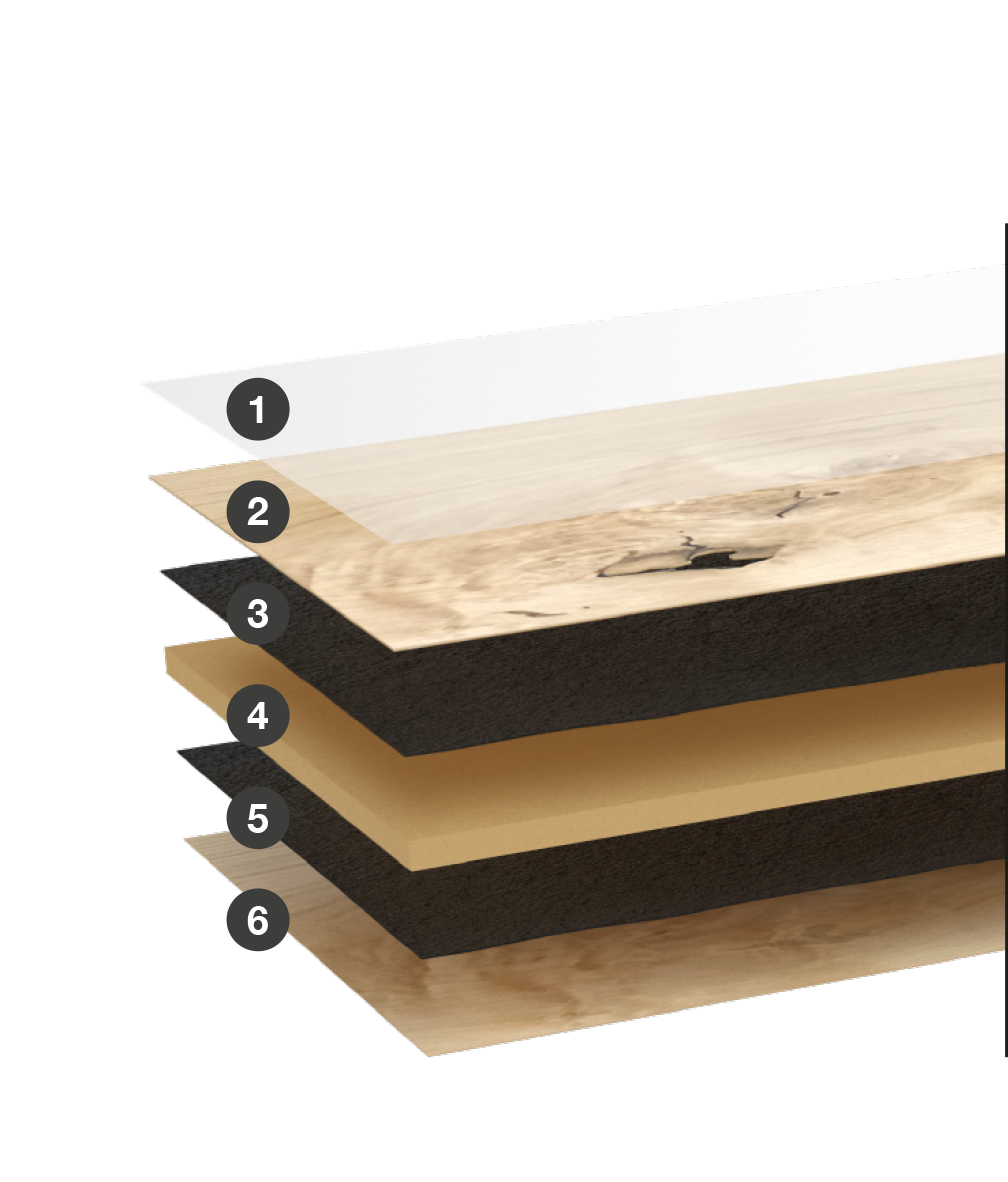
Inside a Woodura® plank:
Because the surface uses a thinner piece of hardwood, the manufacturer says it can produce considerably more flooring from the same amount of timber than traditional hardwood manufacturing.
Think of it as real hardwood used more efficiently: you still get a real wood surface, but the manufacturer uses a much thinner layer of the valuable hardwood.
Hardened hardwood is also designed to resist dents and wear, which may help the flooring last longer.
There is a tradeoff. Since the real-wood layer is thinner, these floors usually can’t be refinished as many times as solid hardwood. If you’re deciding between them, think about how long you want the floor to last and if refinishing matters to you.
Cork is unique because making cork flooring doesn’t require cutting down the tree.
Cork comes from the bark of the cork oak. The bark can be harvested and then grows back, making cork a renewable natural material.
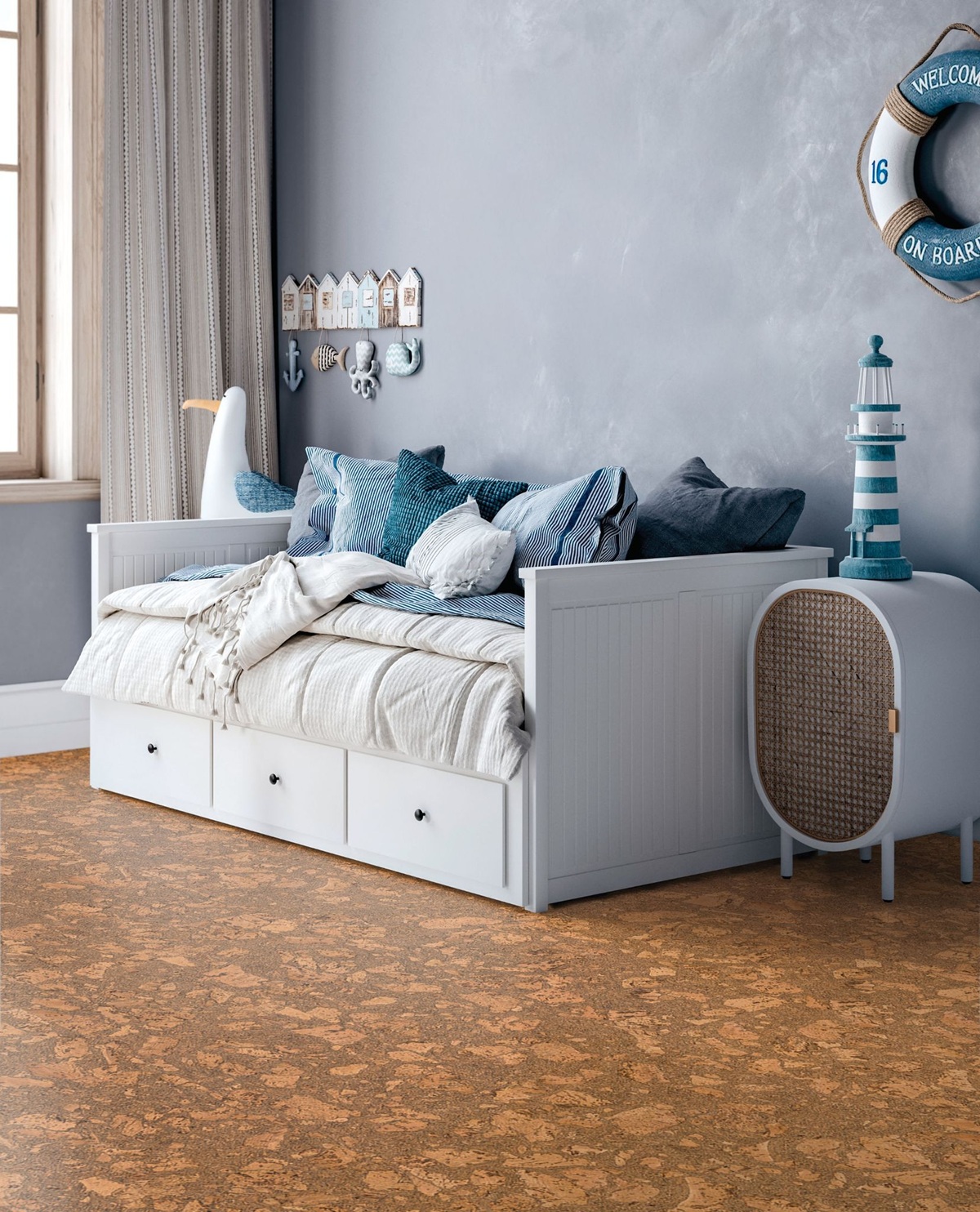
Cork also offers some real benefits.
Cork has a little give underfoot, which makes it comfortable to stand and walk on. Its structure also helps absorb sound and provides some natural insulation.
We recently debuted a new line of cork flooring at Floor Concepts. It’s a good choice if you want something a bit different from traditional hardwood or vinyl. It also has a unique look you won’t find in other flooring.
But cork isn’t ideal for every room. It’s softer than many other floors, so furniture or pet claws can leave dents or scratches. Too much moisture or direct sunlight can also damage it.
However, cork is a great option for bedrooms, offices, and living areas where coziness and quiet are important.
Marmoleum is another flooring option that people sometimes overlook.
Marmoleum is a brand of linoleum. Even though people sometimes use the word “linoleum” loosely, real linoleum is different from vinyl.
It’s mainly made from natural materials like linseed oil, wood flour, rosin, jute, and pigments, not PVC.
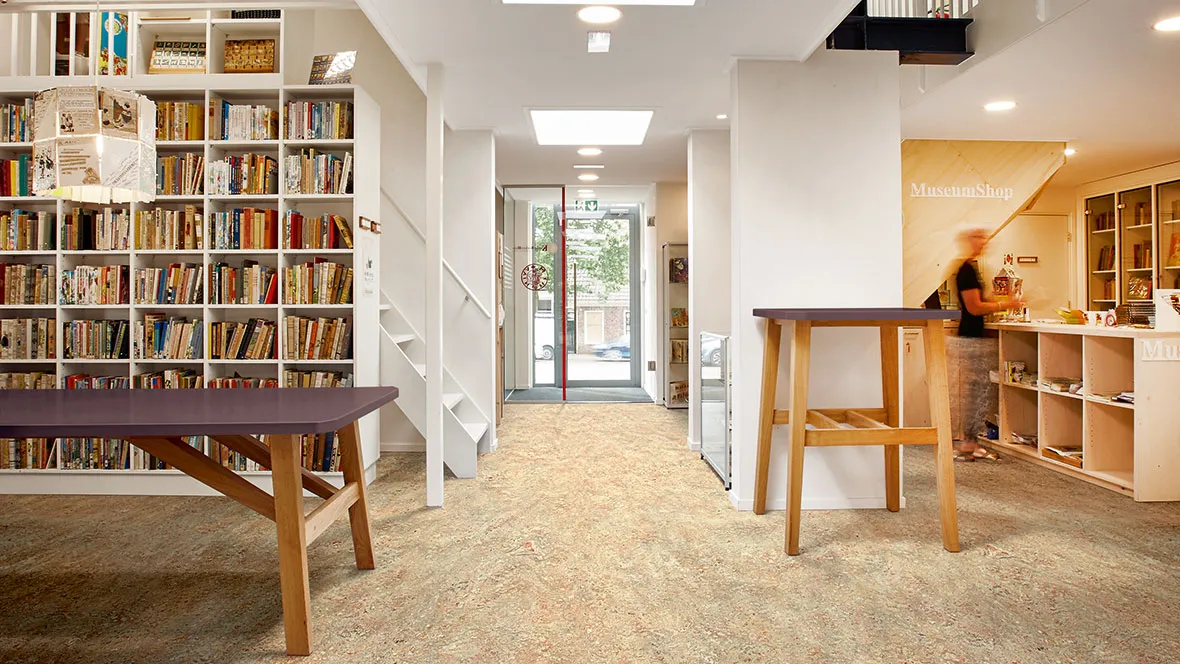
The manufacturer, Forbo, makes several environmental claims about Marmoleum, including its bio-based ingredients and carbon footprint. If those factors are important to you, it’s worth reviewing the environmental information and certifications for the specific product you’re considering.
We’ve sold Marmoleum to customers looking for an alternative to vinyl. While it’s not our top seller, those who chose it have been happy with their decision.
Marmoleum needs a well-prepared subfloor and careful installation. As with any flooring, picking the right room helps it last longer.
We sell a lot of LVP and think it works well in the right situations. But if you care most about the environment, it’s important to know what you’re getting.
LVP is mostly synthetic and often contains PVC, which is made from non-renewable resources. It also won’t break down naturally when you’re done with it.
That doesn’t mean all LVP is the same.
Some brands use recycled materials, and many good products are tested for chemical emissions. If you care about indoor air quality, search for certifications like FloorScore® or GREENGUARD Gold.
It’s important to know that low-VOC doesn’t always mean the product is environmentally sustainable. Low chemical emissions are good for indoor air, but this doesn’t tell you where the materials came from or what happens to the floor when it’s removed.
LVP can still be a sensible option for basements, bathrooms, busy homes, or any space where moisture resistance and durability help the floor last longer. Longevity is also an eco-friendly factor to consider.
We see this tradeoff often with LVP. It’s a practical choice in rooms where moisture or heavy use would shorten the life of some natural flooring, but it isn’t the material we’d choose if using renewable resources is the homeowner’s top priority.
For a closer look, read Pros and Cons of LVP Flooring: Is It Right for Your Home?
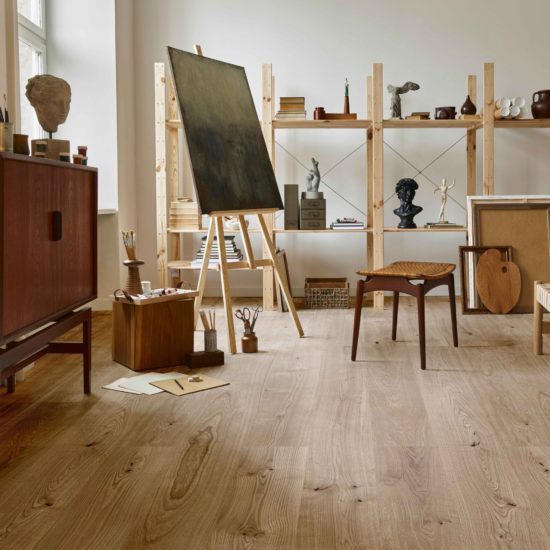
If you like the look and easy click-together installation of luxury vinyl but want to avoid plastic, Lico’s True Earth is worth a look. It’s a click-together plank made almost entirely from recycled and natural materials, with no PVC or plastic in it.
Each plank has three layers:
According to Lico, the wood fiber comes from furniture-industry scraps and the leather from clothing-industry scraps. Lico also runs a Second Life program that takes back and recycles old flooring.
True Earth is 79% recycled content, 100% waterproof, FloorScore certified for indoor air quality, and backed by a verified Environmental Product Declaration (EPD). It’s rated AC5 / Class 33 for wear, which is commercial grade. It comes in 12 wood looks and 4 stone looks.
Carpet also has its particular environmental pros and cons, and a lot depends on the materials used.
Natural carpet fibers such as wool and plant-based fibers such as jute or sisal offer renewable-material options. Some synthetic carpets take a different approach through incorporating recycled materials.
For example, Mohawk’s EverStrand® carpet is made from recycled PET plastic, including material from plastic bottles. Some carpet manufacturers also offer recycling or take-back programs for certain products.
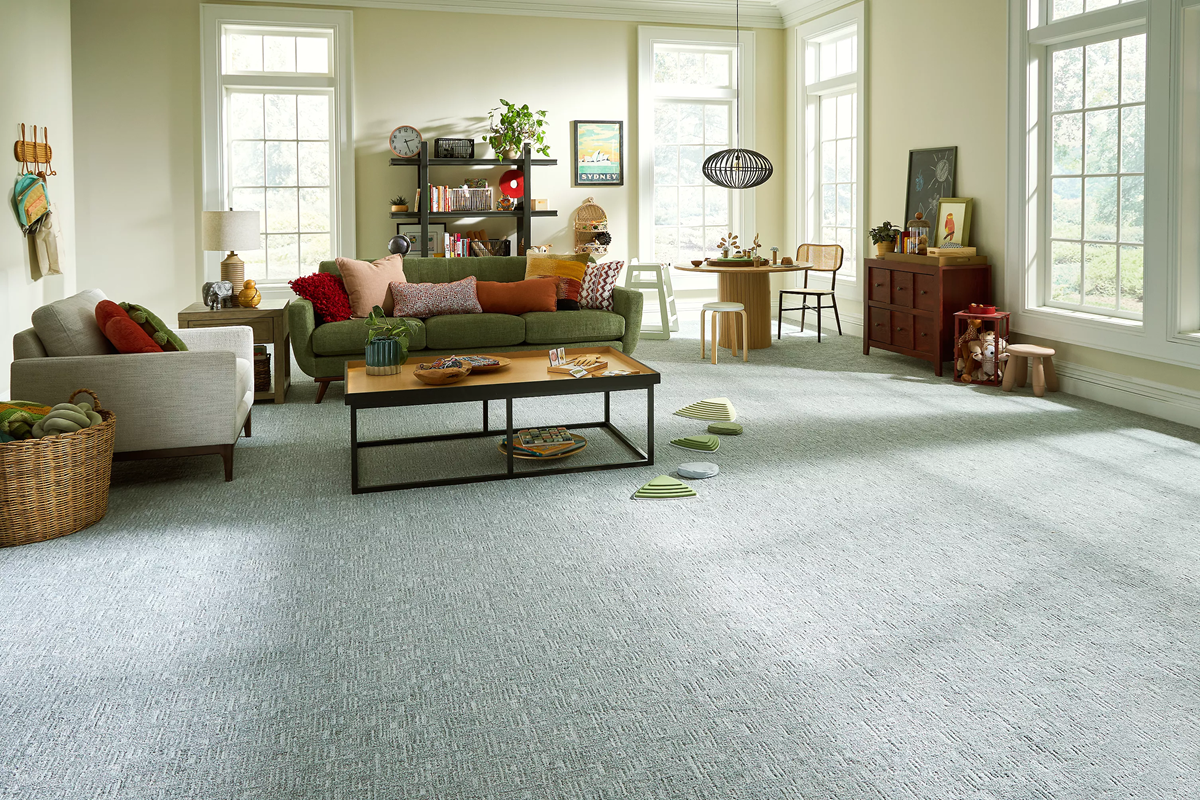
When customers ask us about sustainable carpet, we tell them to look beyond the face fiber. The backing and the manufacturer’s approach to recycling can be just as important.
A durable carpet that suits your needs and lasts for years is better than a lower-quality option that just claims to be eco-friendly.
If you’re trying to compare environmental claims, certifications can give you something more useful than a manufacturer’s marketing language.
A few you may encounter while shopping include:
Not every good floor has every certification. Instead, focus on the certifications that match the environmental issues you care about most.
There isn’t one flooring product that’s the most eco-friendly in every situation. Hardwood and cork are strong choices if renewable materials are your priority. Marmoleum offers another natural-material option, while some carpet and LVP products can make sense when recycled content, indoor air quality, durability, or moisture resistance matter more.
The important thing is to look beyond the word “green.” Ask what the floor is made from, how long it should last, how it affects indoor air quality, and what happens when you’re finished with it.
You don’t need a perfectly “green” floor to make a good choice. You need a floor that fits your values, your home, and the room where it will be installed.
If you’d like help comparing eco-friendly flooring options, visit our Wilmington showroom at 4315 Kirkwood Hwy. Tell us what matters most to you, and we’ll help you understand the tradeoffs before you make a decision.
Or schedule an appointment with one of these links:
Thank you for contacting Carpet One Floor & Home. Your local flooring expert will reach out to you regarding your inquiry.