By: Sean Henry, Owner of Floor Concepts, Inc.
Last Updated: Sept. 4, 2026
Executive Summary: Floating LVP is the most popular choice for homes because it offers more design options and a softer feel underfoot. Glue-down LVP is easier to repair, handles heavy rolling traffic better, and is often the better choice for commercial spaces and rooms where moisture may be a concern. The right choice depends on how you plan to use the room.
You’ve chosen luxury vinyl plank (LVP) for your home, but there’s still one more key decision ahead:
Should you choose a Glue Down or a Floating (Click-Lock) LVP installation?
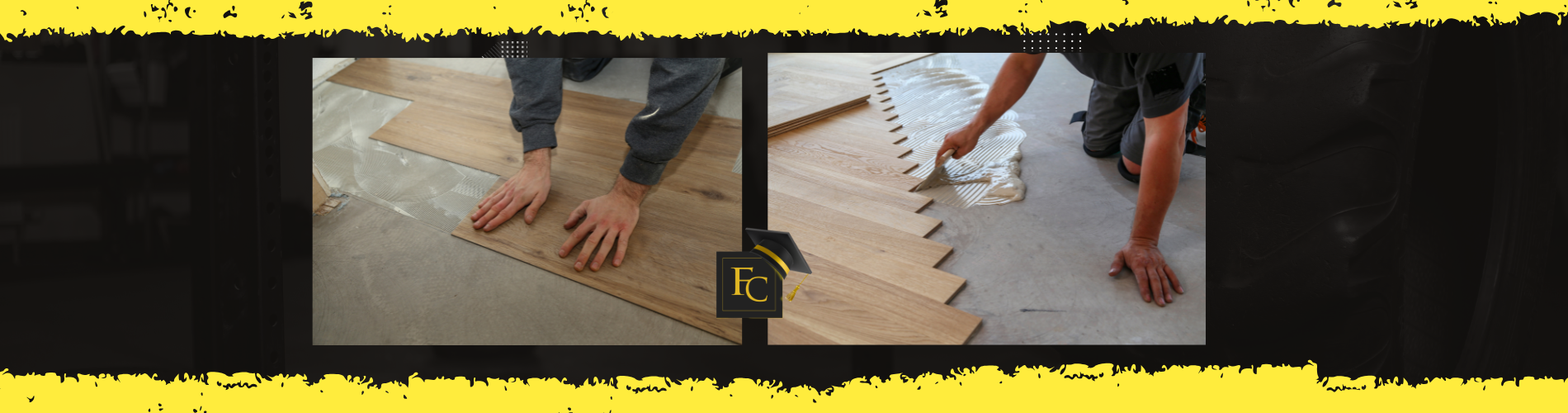
Both options use luxury vinyl plank, but the installation methods are very different. These differences affect how the floor feels, how it handles wheelchairs and moisture, and how easy it is to repair.
At Floor Concepts, we’ve installed both floating and glue-down LVP in thousands of homes and businesses around Wilmington. There isn’t one method that’s always best. The right decision hinges on your subfloor, the room, and how you will use the space.
This guide will explain the differences so you can confidently pick the best option for your project.
Table of Contents
| Feature | Floating LVP | Glue-Down LVP |
|---|---|---|
| Installation | Click-lock planks float over the subfloor | Planks are adhered directly to the subfloor with pressure-sensitive adhesive |
| Typical Product Cost | $3–$8 per sq. ft. | $2–$6 per sq. ft. |
| Typical Installed Cost | $6–$12 per sq. ft. | $5–$11 per sq. ft. |
| DIY Friendly | ✔ Often | ✖ Rarely |
| Thickness | Between 4 mm and 8 mm | Between 2 mm and 4 mm |
| Subfloor Requirements | Must be very flat | More forgiving of minor imperfections |
| Repairs | More difficult | Easier |
| Heavy Rolling Traffic | Not recommended | Excellent |
| Commercial Use | Limited | Very common |
| Moisture-Prone Areas | Good when spills are cleaned promptly | Better choice for areas with ongoing moisture concerns |
| Feel Underfoot | Softer | Firmer |
| Style Selection | Largest selection | More limited |
Floating and glue-down LVP differ in both how they are made and how they are installed.
Floating LVP is usually thicker, often measuring about 4mm to 8mm. It has a rigid core and a click-lock system that allows the planks to connect to one another while resting over the subfloor.
Glue-down LVP is thinner and more flexible, usually measuring about 2mm to 4mm. It does not have the same rigid core or locking system. Instead, each plank is bonded directly to the subfloor with pressure-sensitive adhesive.
Those construction differences affect more than installation. They also influence how the floor feels underfoot, how well it handles rolling traffic, how easily it can be repaired, and how much variety you will find in style and texture.
A simple way to think about it is this:
Floating LVP is thicker, rigid, and designed to lock together. Glue-down LVP is thinner, flexible, and designed to stay firmly attached to the floor below.
For most homeowners, floating LVP offers the best combination of comfort and design.
Today, manufacturers focus most of their product development on floating LVP. In fact, rigid-core floating floors (SPC and WPC) now account for more than three-quarters of all luxury vinyl flooring sold. As a result, floating LVP comes in a much wider variety of colors, realistic wood look, plank sizes, embossed textures, and realistic finishes than glue-down products.
Floating LVP also has a slight cushion underfoot because it isn't attached directly to the subfloor. Many homeowners find it warmer and more comfortable, especially in rooms where they spend long periods standing.
If you're not familiar with SPC and WPC flooring, they each have different strengths. Learn more in our article, WPC vs. SPC: What's the Difference?
Glue-down LVP creates a different experience. Because it is bonded directly to the subfloor, it feels firmer and more solid underfoot. It also produces less of the hollow sound that some homeowners notice with floating floors.
That's one reason glue-down LVP is so common in schools, hospitals, offices, churches, apartment buildings, and other busy commercial spaces where durability and a solid feel are more important than cushioning.
For most living spaces, however, homeowners tend to prefer the added comfort and wider design selection that floating LVP provides.
Glue-down LVP is easier to repair when something goes wrong.
If a plank gets damaged, an installer can usually heat the glue, take out just that plank, put down new adhesive, and install a replacement.
Floating floors are different.
Since all the planks lock together, replacing a damaged one often means taking up the floor from the nearest wall until you reach it. Sometimes, other joints break along the way, so you might need to replace more planks.
Learn more about repairs in our article Pros and Cons with LVP Flooring.
Floating LVP needs a subfloor that’s very flat and dry.
Even small bumps or dips can make the planks flex when you walk on them. Over time, this can stress the locking system and cause gaps or broken joints.
Glue-down LVP handles small imperfections better because each plank sticks right to the subfloor, instead of depending on the other planks for support.
That’s why glue-down is a great choice for many concrete subfloors.
But keep in mind, glue-down flooring will follow every bump and dip in the floor underneath. If your concrete feels hard and cold now, the finished floor will feel the same.
Learn more about subfloor preparation in our LVP Installation Guide.
Both types work well if installed properly, but glue-down LVP is usually better for areas where moisture is a regular problem.
That’s why we often suggest it for basements, laundry rooms, bathrooms, and other places with concrete subfloors.
No matter which method you pick, always deal with standing water and leaks right away. Neither type of flooring can stop damage from ongoing moisture under the floor.
If your room will have wheelchairs, rolling chairs, hospital equipment, or heavy carts, this could be your most important flooring decision.
Glue-down LVP is made for these tough environments.
Since each plank is glued to the subfloor, there aren’t any locking joints to wear out from rolling pressure.
We’ve seen homeowners have to replace their floors because a floating floor was used where glue-down would have worked better.
For businesses, medical offices, schools, churches, apartment buildings, and homes with daily wheelchair use, glue-down flooring is usually the better long-term choice.
Over the years, we've found that the biggest mistakes happen when buyers focus only on price instead of how the room will actually be used. A flooring installation that performs beautifully in a bedroom may not hold up in a busy medical office, and a product that's perfect for a family room may not be the best choice for a basement or laundry room.
We install floating LVP in most homes because homeowners tend to prefer the realistic wood looks, wider style selection, and softer feel underfoot. It's usually a great fit for living rooms, bedrooms, family rooms, and other residential spaces.
But our recommendation changes when the room has different demands. For basements, laundry rooms, commercial spaces, medical offices, schools, churches, or areas with heavy rolling traffic, glue-down LVP is often the better choice. Its durability, easier repairs, moisture resistance, and ability to handle rolling traffic make it well suited for these tougher applications.
The best LVP floor and installation method isn't about what's most popular. It's about choosing the right flooring for your space and the way you'll use it.
At Floor Concepts, we've helped thousands of homeowners and businesses throughout the Wilmington area make that decision before they invest. And we are here to help when you are ready to begin your project.
If you're wondering what floating or glue-down LVP will cost, start with our Luxury Vinyl Plank Cost Guide, where we explain what affects pricing and what you can expect to pay.
If you'd like a personalized estimate for your project, try our Pricing Calculator to get a ballpark price based on the size of your space.
1. Do I need to remove my existing flooring before installing floating or glue-down LVP?
It depends on the installation method and what flooring is currently in place. Floating LVP can often be installed directly over existing hard surfaces like sheet vinyl, tile, or hardwood—provided the surface is flat, clean, and structurally sound. Glue-down LVP, however, almost always requires removing existing flooring so the adhesive can bond cleanly to a prepped, porous subfloor or concrete slab. Neither type should ever be installed over carpet. For specific requirements, read our detailed guide: Can I Install LVP Over My Existing Floor?
2. Can I install floating LVP in my kitchen or under heavy kitchen cabinets and islands?
No, heavy kitchen islands and permanent floor-mounted cabinetry should never be installed directly on top of a floating LVP floor. Floating floors need space to expand and contract naturally with temperature changes; pinning them down with heavy cabinets can cause the planks to buckle, gap, or break at the locking joints. For kitchens, cabinets must be installed first, with the floating floor laid up to the cabinet bases. If you prefer to lay flooring wall-to-wall before installing cabinets, glue-down LVP is the safer choice because it is permanently bonded to the subfloor. 👉 For this and other LVP installation questions, read our LVP Installation Guide.
3. Does floating or glue-down LVP require an underlayment or acoustic padding?
Many floating LVP options come with an underlayment pre-attached to the bottom of the plank to dampen sound and add subtle cushion. If your floating plank doesn't have attached padding, a separate foam or rubber underlayment may be recommended by the manufacturer. Glue-down LVP, on the other hand, is glued directly to the subfloor and does not use traditional foam underlayments, though specialized sound-dampening acoustic membranes can be glued down beneath it if strict noise-reduction standards are required (such as in multi-family condo buildings).
4. Will steam mops damage floating or glue-down LVP floors?
Yes, steam mops should be avoided on both floating and glue-down LVP. The combination of intense heat and pressurized moisture can weaken the pressure-sensitive adhesive underneath glue-down planks, causing them to lift or shift. On floating floors, forced steam can penetrate the locking seams, trapping moisture underneath the core and causing edge-peeling or mold growth on the subfloor. For regular cleaning, stick to a microfiber mop and a pH-neutral cleaner specifically formulated for luxury vinyl.
5. Which installation option adds more long-term resale value to a home?
Neither method inherently adds more financial equity than the other; rather, value is determined by the quality of the product and how well the installation matches the space. Homebuyers generally favor floating LVP because modern rigid-core options offer wider plank formats, high-end wood textures, and a softer feel underfoot. However, in high-moisture basements or homes where long-term durability and easy plank replacement are key, a professionally installed glue-down LVP holds exceptional long-term value by preventing costly water damage failures down the road.
Thank you for contacting Carpet One Floor & Home. Your local flooring expert will reach out to you regarding your inquiry.