If you are planning to remodel your home, you have probably heard a lot of buzz about Luxury Vinyl Plank flooring, often called LVP. It is easily one of the most popular flooring choices on the market today.
But if you look at home improvement forums or talk to neighbors, you will find a lot of mixed opinions. Some people swear it is the best thing that ever happened to their home. Others worry it is just a temporary trend that will look cheap in a few years.
When you walk into a flooring showroom, it is easy to get overwhelmed by all the beautiful samples. At Floor Concepts, our goal is to pull back the curtain. After helping families select and install flooring for over 40 years in the Wilmington, Delaware area, we believe the best customer is an educated customer.
Let’s take an honest, unbiased look at what makes this material great, where it falls short, and how to decide if it actually belongs in your house.
To understand LVP, you have to forget about the old, yellowing linoleum your grandparents had in their kitchen. Modern luxury vinyl is an entirely different product.
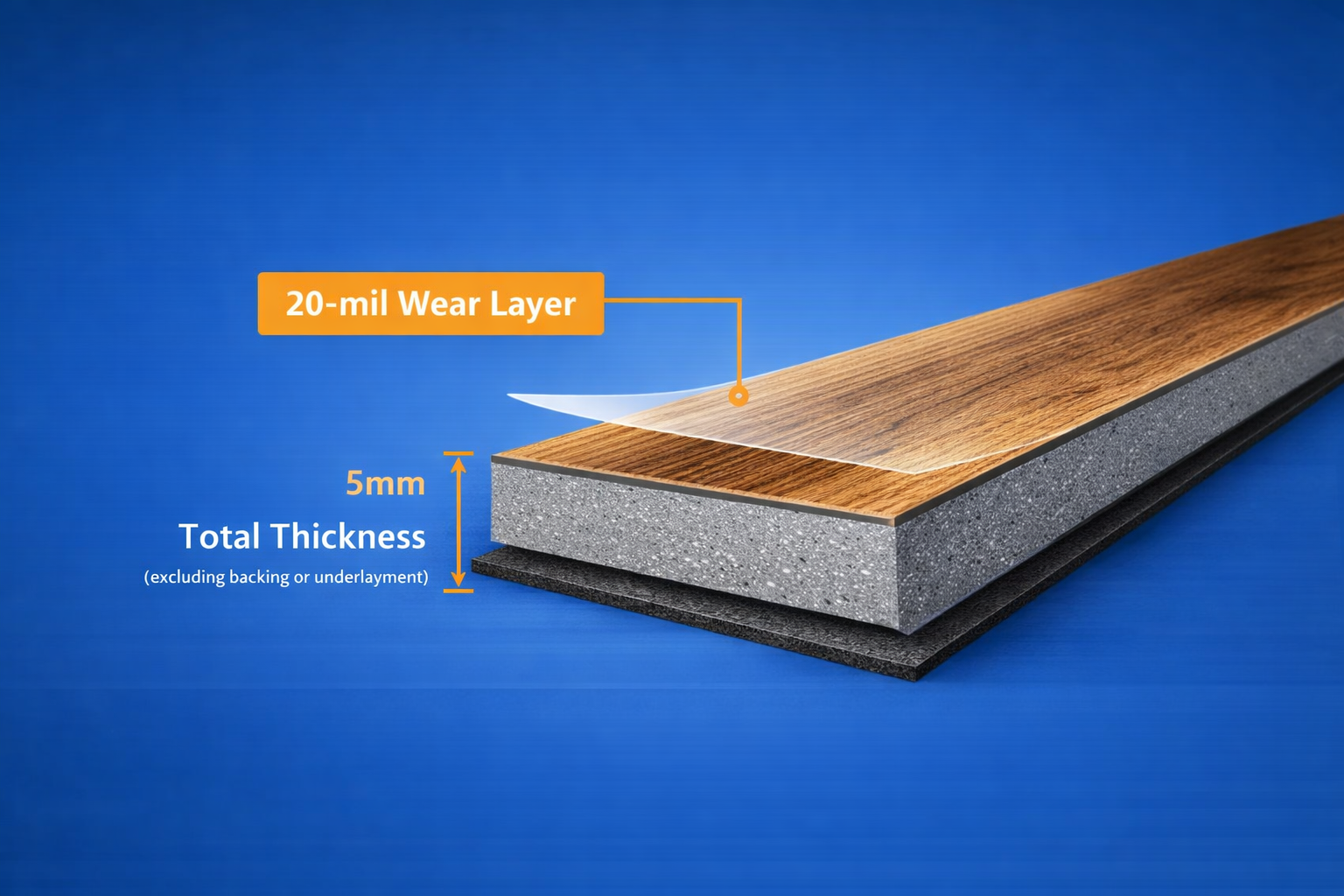
LVP is designed to mimic the exact look, texture, and size of real hardwood planks or stone tiles. It is built in layers. The bottom layer is the backing, which provides stability. The middle layer is a rigid core that keeps the plank stiff and strong. On top of that is a high-resolution photographic image, finished with a clear, durable protective shield called a wear layer.
The reason it has taken over the market is simple: it offers the warmth and beauty of natural materials at a fraction of the price, combined with durability that real wood simply cannot match.
If you're new to luxury vinyl flooring and want a deeper explanation of how it's made, the different types available, and common industry terms, read our guide: What Is LVP (Luxury Vinyl Plank)?
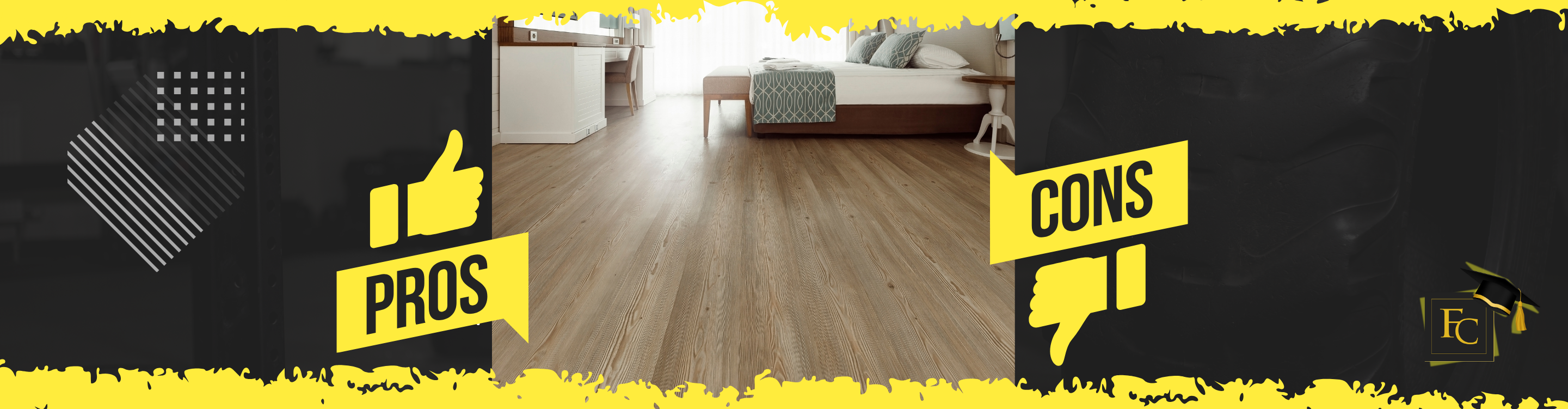
If you're short on time, here's the quick overview. We've put together this snapshot of the biggest advantages and disadvantages of Luxury Vinyl Plank flooring based on what we've seen after helping thousands of homeowners choose new floors.
Remember, every flooring material has trade-offs. The goal isn't to find a "perfect" floor—it's to find the one that's the best fit for your home, your lifestyle, and your budget. Below is the high-level comparison, and then we'll walk through each point in more detail so you can make an informed decision.
| Pros of Luxury Vinyl Plank (LVP) | Cons of Luxury Vinyl Plank (LVP) |
|---|---|
| Waterproof: Ideal for kitchens, bathrooms, laundry rooms, and basements where moisture is a concern. | Doesn't add the same resale value as hardwood: While attractive, LVP isn't viewed the same as real wood by home buyers and appraisers. |
| Durable: Stands up well to kids, pets, and everyday wear and tear. | Can't be refinished: Once the wear layer is damaged, individual planks must be replaced rather than sanded and refinished. |
| Wide variety of styles: Available in realistic wood, stone, and tile looks to match almost any design style. | Requires a flat subfloor: Uneven subfloors can lead to clicking, gaps, or premature failure. |
| Budget-friendly: Offers the appearance of hardwood at a lower material and installation cost. For example, LVP is usually $5 - $12 sq ft. vs. hardwood is between $12 - 25 per sq. ft. | Quality varies: Lower-priced LVPs tend to last 5-10 years, while higher quality can last up to 25 years. |
| Low maintenance: Easy to clean with regular sweeping and occasional damp mopping. | Can fade or expand in extreme conditions: Direct sunlight and large temperature swings can affect some products. |
| Comfortable underfoot: Softer and quieter than tile or stone, especially with an attached pad. | Not biodegradable: Most LVP will eventually end up in a landfill when it's replaced. |
| Quick installation: Many products feature click-lock systems that can speed up installation. | Can be difficult to remove: Glue-down installations require significantly more labor when it's time for replacement. For a standard 200-square-foot room, expect to pay between $400 and $800 for professional tear-out and disposal. |
So, what makes Luxury Vinyl Plank one of the most popular flooring choices today? For many homeowners, it comes down to finding a floor that looks beautiful, holds up to everyday life, and doesn't break the budget. Here's a closer look at why LVP continues to be such a popular choice.
This is one of LVP's biggest selling points. Unlike hardwood, which can warp or buckle when exposed to moisture, the plank itself is waterproof. That makes it an excellent choice for kitchens, bathrooms, laundry rooms, and basements where spills and humidity are part of everyday life. Just remember that waterproof doesn't mean maintenance-free. Standing water should still be cleaned up promptly so moisture doesn't seep beneath the flooring.
Gives homeowners almost endless design possibilities. Today's LVP goes far beyond the basic oak and maple looks of the past. Thanks to advances in manufacturing, you can find realistic wood grains, rustic reclaimed wood, natural stone, slate, concrete, and many other designs. Whether your style is traditional, modern, farmhouse, or somewhere in between, there's a good chance you'll find an LVP that fits your vision.
Is another reason so many families choose LVP. If you have kids racing through the house, pets with sharp nails, or furniture that gets moved around from time to time, LVP is designed to handle everyday wear. Its clear wear layer acts like a protective shield, helping resist scratches, scuffs, and minor dents while making the floor easy to clean and maintain.
Of course, even the toughest flooring isn't the right fit for every household. If you're wondering how luxury vinyl compares to other flooring options based on pets, kids, moisture, and everyday wear, read our guide, Will This Flooring Hold Up in My Home? to learn how to match flooring performance to your lifestyle.
Luxury Vinyl Plank flooring makes it possible for many homeowners to achieve the look of hardwood without the hardwood price tag. We've worked with families who were able to update their kitchen, dining room, and family room with LVP while staying comfortably within the budget they had planned. For homeowners looking to maximize both style and value, that's a combination that's hard to beat.
Wondering what luxury vinyl might cost for your own home? Our Pricing Calculator can give you a quick estimate based on the rooms you're planning to update.
As much as we like Luxury Vinyl Plank, we also believe it's important to be upfront about its limitations. No flooring material is perfect, and LVP is no exception. Understanding these trade-offs before you buy can help you decide whether it's the right fit for your home and prevent surprises down the road.
While today's LVP can look remarkably realistic, buyers and appraisers still view real hardwood differently. Hardwood floors are considered a premium feature that can increase a home's value, while LVP is generally seen as a durable, attractive flooring option rather than a long-term investment. If maximizing resale value is one of your top priorities, hardwood may be worth the additional cost.
One of the biggest advantages of hardwood is that it can often be sanded, stained, and refinished several times over its lifetime. LVP doesn't offer that option. If a plank becomes deeply scratched, gouged, or otherwise damaged, it can't be restored. Instead, the damaged plank will need to be replaced.
This is one of the biggest misconceptions we see. We've had homeowners come to us after buying beautiful LVP elsewhere and installing it over an older plywood subfloor, only to wonder why six months later they hear clicking every time they walk across the room. In many cases, the flooring itself wasn't the problem—the floor underneath it was. Because LVP follows the contours of the surface below, dips, humps, and uneven areas can lead to movement, gaps, or even damage to the locking system over time. That's why proper subfloor preparation is one of the most important parts of a successful LVP installation.
This is the single most important secret in the flooring industry: The longevity of your new floor has less to do with the plastic plank itself, and everything to do with the subfloor underneath it.
A subfloor is the plywood or concrete foundation that sits beneath your flooring. Many people think they can buy a beautiful box of flooring, snap it together over an old, uneven plywood floor, and call it a day.
If your subfloor is not completely flat, clean, and level, your new LVP floor will run into trouble. When you walk across a floor with hidden dips underneath it, the planks will flex downward into those empty pockets. Over a few months, that constant flexing puts immense stress on the locking joints. Eventually, those microscopic joints will crack, causing the planks to separate, gap, or make a clicking sound when you step on them.
Prepping a subfloor takes time, specialized tools, and experienced hands. Skipping this step to save a few dollars on a cheap installation is the number one reason LVP floors fail early.
Before you commit to buying luxury vinyl for your entire house, let's break down where it works beautifully and where you might want to reconsider:
Mudrooms, Kitchens, and Basements (Excellent): These are the absolute best places for LVP. Basements are prone to moisture, mudrooms get tracked with rain, and kitchens see constant spills and heavy foot traffic. LVP handles all of these challenges with ease.
Living Rooms and Bedrooms (Good): LVP works wonderfully here for a clean, modern look, especially if you have pets. However, keep in mind that vinyl can feel a bit firmer and cooler underfoot than real wood. Adding a plush area rug is a great way to soften up these spaces.
Sunrooms (Be Very Careful): Cheap or poorly made vinyl planks can expand and contract drastically when subjected to temperature swings. Furthermore, intense, constant UV rays can cause the image layer to fade slightly in direct sunlight over time. If you have a sunroom with wall-to-wall windows, you need a highly stable, premium core material, and you should use blinds or UV-blocking window coatings.
When you are comparing options, you will find planks that look similar but have wildly different prices. To protect your wallet, you need to know how to read a product label. Don't look at the style name—look at the numbers.
First, check the wear layer thickness, which is measured in "mils" (not millimeters). For an active residential home, you should look for a wear layer of 20 mil or greater. Cheap, bargain-basement floors often use a 6 mil or 12 mil wear layer, which will scuff, dull, and show dents from heavy static furniture within just a few years of heavy use.
Second, check the overall thickness. A good, reliable rigid-core plank should generally be around 6mm thick or greater. Thinner planks (3mm to 4mm) are often brittle, easily telegraph subfloor imperfections, and feature weak, fragile locking systems that break during installation.
For a more detailed list of how to tell the difference between a high-quality product that is on sale vs a low-quality knock-off, check out our article Is $1.99 Luxury Vinyl Plank Flooring Really a Good Deal?
At Floor Concepts, we carefully hand-select and curate the brands in our showroom because we refuse to sell a floor that we know won't last in a busy home. We actually talk customers out of LVP sometimes. If we think hardwood or tile is a better fit for the way someone lives, that's what we'll recommend.
Most homeowners don't think about what happens twenty years from now when they're choosing a floor today. But it's worth considering. One long-term factor to consider is what happens at the end of your floor's life. Vinyl is highly durable, but it is not biodegradable, meaning old planks will eventually end up in a landfill when you decide to remodel decades down the road.
Additionally, depending on the installation style you choose, LVP can be difficult to remove. While a floating click-lock floor can be uninstalled fairly easily, a full glue-down vinyl plank floor or a perimeter-sealed project requires extensive scraping and labor to peel away from the subfloor later. Knowing how long you plan to stay in your home can help you choose the right installation method today.
After weighing the benefits and limitations, you might still be sitting on the fence. In our professional experience, LVP is a fantastic solution for many families because it hits that "sweet spot" of looking high-end while remaining incredibly tough and cost-effective. If your home is a whirlwind of activity—think muddy paws, energetic kids, and high-traffic hallways—you will likely appreciate the peace of mind this material provides. It is also the undisputed champion for moisture-heavy zones like bathrooms, laundry rooms, and basements where real wood would simply fail.
However, if you have your heart set on the timeless prestige of natural timber and the ability to sand and refinish your investment thirty years from now, then traditional hardwood is likely worth the higher price tag. At the end of the day, no single product is a perfect match for every household. The best choice is the one that aligns with your specific lifestyle and long-term goals. That is why we focus on listening rather than selling; we want to ensure you choose a floor that makes you happy every time you walk through the door.
| LVP May Be Right for You If... | You May Want to Consider Another Option If... |
|---|---|
| You have kids, pets, or a busy household. | You've always wanted authentic hardwood flooring. |
| You want a waterproof floor for kitchens, bathrooms, or basements. | You're planning to stay in your home for decades and want a floor that can be refinished. |
| You love the look of wood but want a more budget-friendly option. | Maximizing long-term resale value is your top priority. |
| You want a low-maintenance floor that's easy to clean. | You prefer natural materials over manufactured products. |
| You want a durable floor that can handle everyday wear and tear. | You don't mind the additional maintenance that comes with real hardwood. |
So, is Luxury Vinyl Plank a good buy? For the vast majority of homeowners in our area, the answer is a resounding yes—if you buy a quality plank and install it correctly.
This is especially true in the Wilmington area, where many of our beautiful neighborhoods feature older homes built with settling plywood subfloors or aging concrete foundations. These unique local conditions require a highly stable flooring material and a team that knows exactly how to prepare a subfloor before the first plank is ever laid down.
When you buy a floor from a giant box store or an online discount warehouse, you are just buying a stack of cardboard boxes. If something goes wrong, you are left to deal with automated customer service loops or finger-pointing subcontractors.
We do things differently. When you partner with Floor Concepts, you aren't just buying material—you are buying a guaranteed, completed room. We handle the technical subfloor inspections, use master installers who understand different locking profiles, and back our workmanship with a 100% lifetime installation warranty.
If you are trying to decide if LVP is the right choice for your family's unique lifestyle, layout, and budget, the best next step is to come see the options in person. Visit our Wilmington showroom today, and we will help you compare products side-by-side with honest, straightforward advice.
Thank you for contacting Carpet One Floor & Home. Your local flooring expert will reach out to you regarding your inquiry.