Author: Sean Henry, Owner of Floor Concepts
Executive Summary: Nylon carpet is usually the better choice for busy areas such as stairs, hallways, and family rooms because it holds its shape and resists crushing better. Polyester carpet is often the better value for bedrooms, guest rooms, and other lower-traffic spaces where softness, stain resistance, and a lower price matter more.
The important thing to remember is that fiber is only part of the equation. The carpet’s construction, density, twist, and quality can make a major difference in how it performs.
Shopping for new carpet can get overwhelming quickly. You might expect to just pick a color, but soon you’re faced with technical terms like solution-dyed, face weight, twist level, and fiber memory.
If you’ve checked out our main carpet guide, you know there are several materials to choose from. Since nylon and polyester are two of the most common carpet fibers you’ll encounter when shopping for your home, we decided to take a closer look.
After more than 40 years of helping Wilmington-area homeowners choose carpet, we’ve learned that neither fiber is automatically “better.” The right choice depends on where the carpet is going, how much traffic it will get, and what matters most to you.
In this guide, we’ll explain the real-world differences in cost, durability, stain resistance, pet-friendliness, and maintenance. This way, you can make a smart choice for your home and budget.
Let’s start by comparing nylon and polyester side by side.
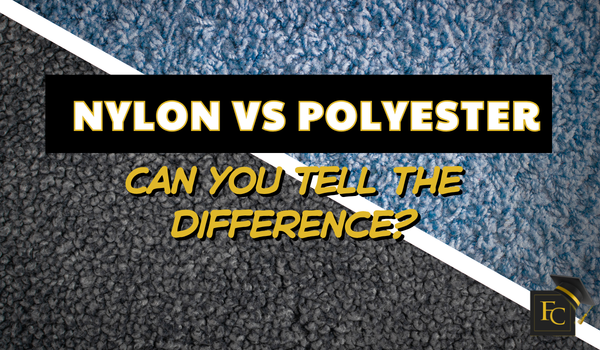
If you want a quick summary before we get into the details, here’s how nylon and polyester compare. The main differences are in cost, durability, stain resistance, and maintenance.
| Feature | Nylon Carpet | Polyester (PET) Carpet |
|---|---|---|
| Durability & Resilience | Outstanding (springs back under weight) | Moderate to Good (can flatten in high traffic) |
| Stain Resistance | Good (needs chemical coating or solution-dye) | Exceptional (naturally repels water-based liquids) |
| Upfront Cost | $3.50 – $15.50 per sq. ft. | $1.35 – $9.50 per sq. ft. |
| Fade Resistance | Good (solution-dyed nylon performs best) | Exceptional (holds color in direct sunlight) |
| Average Lifespan | 10 – 15+ years | 5 – 8 years (in high-traffic areas) |
| Best Used For | Stairs, busy hallways, main living areas | Bedrooms, guest rooms, basement living spaces |
Key takeaway: Don’t choose carpet based only on the fiber name. How the carpet is made is just as important. A dense, tightly twisted, high-quality polyester can often perform better than a loosely woven, low-quality nylon.
If your main goal is to keep upfront costs low, polyester is usually the winning choice. Polyester is about 20% to 30% cheaper than nylon. You can find soft, comfortable polyester carpets that fit a tight budget, which makes them popular for whole-house renovations on a deadline.
Nylon costs more at first, but it’s a long-term investment. Since it keeps its shape much longer without matting, the yearly cost is often lower over time.
In our experience, the difference between a good polyester and a comparable nylon carpet can be roughly $2–$6 per square foot, although construction and quality can change the price significantly.
We’ve seen homeowners save money on the original carpet only to spend more later when a low-cost carpet had to be replaced sooner than expected. That’s why we look at the cost of the entire flooring project, not just the price per square foot.
To get an overall picture of how much carpet will cost, check out our guide How Much Does Carpet Cost in Wilmington, DE?
Now that we’ve covered cost, let’s see why nylon is the top choice for stairs and hallways.
Carpet fibers get worn down in places where people walk every day. Nylon has great bounce-back ability. When heavy foot traffic or furniture presses it down, the fibers return to their original shape instead of staying flat. This helps prevent those unsightly, flattened paths in your hallway.
In our experience, this is one of the biggest differences homeowners notice over time. We’ve had customers come back to us after living with carpet for several years and tell us that the areas they use the most, especially stairs, hallways, and paths between rooms, are where they notice the most flattening. That’s why we pay much more attention to resilience when we’re choosing carpet for those areas.
Polyester is a softer plastic fiber and doesn’t have the same resilience. Over time, repeated use flattens the fibers, causing them to mat down. Once polyester carpet is permanently flattened in a busy area, vacuuming or steam cleaning can’t bring it back up.
Now that we’ve talked about durability, let’s see how each fiber deals with spills and stains.
Polyester naturally repels water and liquid spills. If you spill coffee, juice, or wine on a polyester carpet, the liquid stays on the surface instead of soaking in. This makes cleaning up everyday spills much easier.
Standard nylon absorbs liquids naturally. To help with spills, manufacturers add a protective coating. This works well at first, but the treatment can wear off after years of vacuuming and steam cleaning.
There’s an exception: solution-dyed nylon. Instead of adding color after the fiber is made, the color goes in while the fiber is still liquid, so it’s colored all the way through. Solution-dyed nylon combines nylon’s durability with excellent stain and fade resistance.
Both types of carpet need regular care to stay looking good, but they react differently to deep cleaning. Regular vacuuming removes dirt before it wears down the fibers. Professional cleaning can remove the soil that weighs carpet fibers down and help nylon recover its appearance.
Polyester is easy to spot-clean because spills tend to stay closer to the surface. Professional cleaning can remove dirt from polyester, but it can’t restore fibers that have permanently lost their resilience.
Choosing carpet for a pet-friendly home comes down to balancing liquid messes against physical wear and tear. Polyester holds the advantage for house-training accidents, vomit, and mud because it naturally repels water. Polyester fibers naturally resist absorbing many water-based spills, which can make everyday cleanup easier.
However, repeated traffic from large or active dogs can cause polyester carpet to flatten sooner, while nylon’s resilience helps it recover from repeated foot and paw traffic.
For pet owners who want to balance durability and stain resistance, solution-dyed nylon can be an excellent choice. Because the dye is baked straight into the yarn during manufacturing, it combines nylon’s toughness against pet traffic with incredible stain resistance. That means you can tackle stubborn pet accidents using stronger cleaners without bleaching out the carpet color.
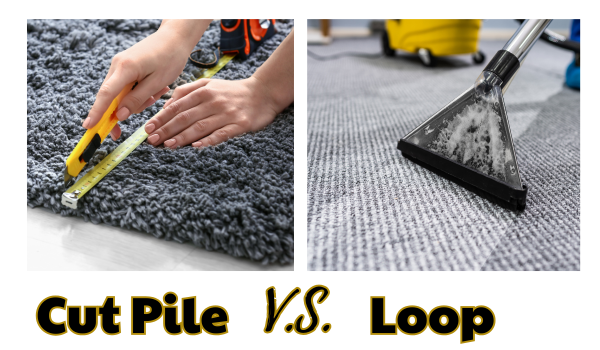
Regardless of which fiber you pick, smart design choices make daily maintenance much easier. Opting for a cut-pile carpet rather than a looped Berber prevents claws from catching and snagging loose threads. Selecting a flecked, heathered, or multi-tonal color pattern will also help hide loose pet hair and tracked-in dirt between vacuumings.
For a bigger picture, check out our guide to the best flooring options for homes with kids and pets.
One thing we’ve learned from more than 40 years of helping homeowners choose carpet is that the “best” fiber can change from room to room. A family with three kids and two dogs may need a very different carpet in the family room than they do in a guest bedroom that’s used a few times a year.
Rather than picking one type of carpet for your whole house, it’s best to match the fiber to how each room is used.
| Room or Situation | Carpet Fiber to Consider | Why |
|---|---|---|
| Stairs and hallways | Nylon | Excellent resilience helps it hold up to heavy foot traffic and resist crushing. |
| Family rooms | Usually nylon | Better suited to the higher traffic and everyday wear common in these spaces. |
| Bedrooms | Polyester | A good value for lower-traffic areas where softness and stain resistance are priorities. |
| Guest rooms | Polyester | Lower traffic means you may not need to pay extra for nylon’s added durability. |
| Finished basements | Depends | Consider the room’s moisture conditions and the specific carpet’s construction before choosing a fiber. |
| Homes with pets | Polyester or solution-dyed nylon | Polyester offers excellent stain resistance, while solution-dyed nylon combines durability with strong stain and fade resistance. |
If you’re carpeting a busy part of your home, nylon is usually worth the extra investment. If you’re carpeting a bedroom, guest room, or another lower-traffic space, polyester can give you the softness and stain resistance you want at a lower price.
The important thing is not to choose based on fiber alone. Construction, density, twist, and how the room will be used all matter.
If you’re still deciding, our experienced flooring experts can help you compare nylon and polyester options and find one that fits both your needs and budget. Stop by our showroom at 4315 Kirkwood Hwy, or schedule an appointment with one of these links:
Thank you for contacting Carpet One Floor & Home. Your local flooring expert will reach out to you regarding your inquiry.