Have you been hearing a lot about LVP flooring lately but still aren’t totally sure what it is?
Maybe someone suggested it for your kitchen. Maybe you saw it online and thought, That looks like hardwood… but is it? And now you’re wondering whether it’s just another kind of vinyl or something entirely different.
If you’re trying to make sense of LVP before making a decision for your home, you’re in the right place. Let’s walk through what it is, how it’s built, where it works best — and where it doesn’t — so you can decide if it fits your lifestyle.
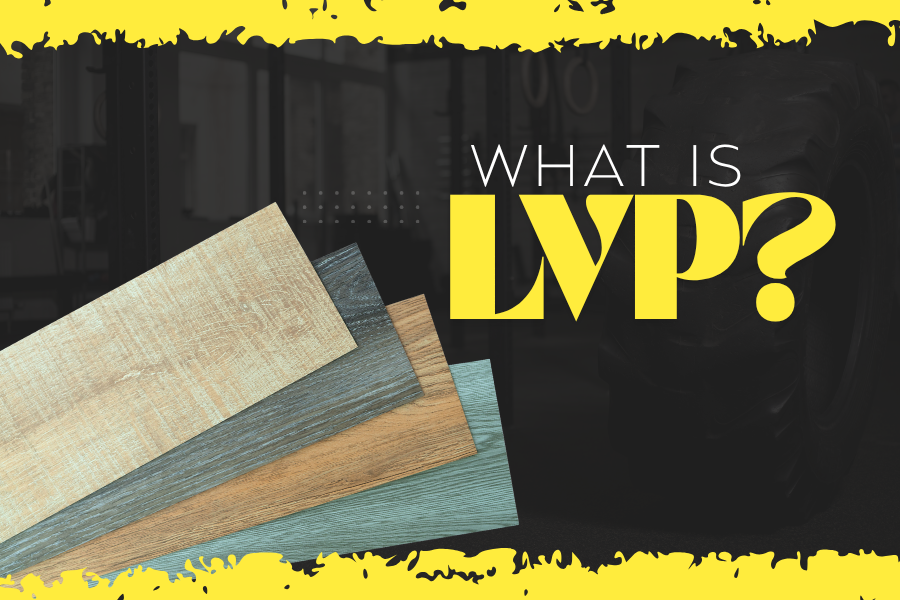
LVP stands for Luxury Vinyl Plank.
It’s a type of flooring designed to look like hardwood, but with more resistance to moisture and everyday wear. Unlike old sheet vinyl that came in large rolls, LVP comes in individual planks shaped like wood boards. Once installed, it can look surprisingly similar to real hardwood.
LVP is made primarily from PVC (yes, that same plastic that is likely in your plumbing), but modern manufacturing has come a long way. Today’s LVP often includes realistic textures, detailed wood patterns, and layered construction that makes it far more durable than older vinyl products.
When people hear “luxury,” they sometimes assume it means expensive.
In this case, it really refers to the upgraded construction and design. Luxury vinyl is thicker, more detailed, and more durable than traditional vinyl flooring from decades past.
It’s not about fancy. It’s about better performance and better appearance.
LVP is considered resilient flooring, meaning it has some flexibility and a bit of softness underfoot.
That slight give makes it more comfortable to stand on and warmer to the touch than ceramic or stone. It’s different from hardwood, laminate, and tile. It’s its own category, built in layers for durability and comfort.
Traditional vinyl flooring usually came in large sheets with printed patterns that could look flat or artificial.
LVP is manufactured in planks and built with multiple structural layers. Many products today include textured surfaces that align with the wood grain pattern, so it not only looks more realistic — it feels more realistic too.
It’s a significant step forward from the vinyl floors many people remember from years ago.
LVP is built in layers, and each one serves a purpose.
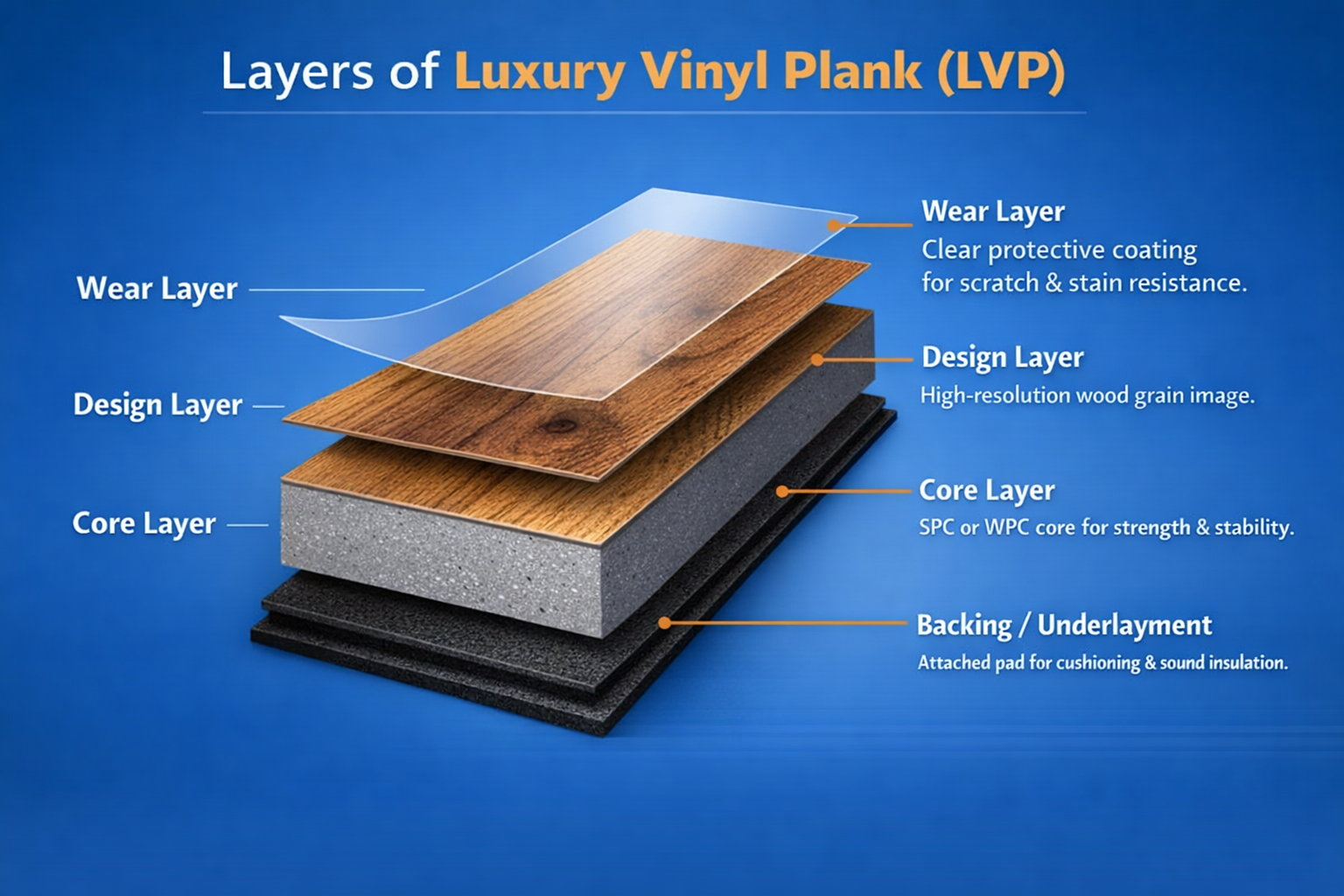
If you’d like to go deeper into LVP core types, we cover that in detail in our article: WPC vs SPC.
This is where LVP really shines.
Manufacturers now create styles that mimic oak, maple, hickory, walnut, and even some exotic or endangered wood species that you cannot get in real hardwood. Plank widths range from about 2½ inches, which resembles traditional hardwood, up to 9 inches for a more modern look. Lengths typically range from 48 to 72 inches. This flexibility allows homeowners to achieve styles that would be difficult or expensive with solid wood.
LVP no longer looks like the flat laminate flooring popular in the mid-1990’s. Today, products use embossed-in-register technology, meaning the texture follows the grain pattern exactly. When you run your hand across it, it doesn’t just look like wood; it feels closer to it, too.
Underfoot, LVP is typically softer than hardwood and warmer than tile. It doesn’t feel identical to real wood, but many homeowners appreciate the comfort factor in daily life.
One of the biggest reasons homeowners choose LVP is moisture resistance.
Many LVP products are labeled “waterproof,” meaning the core won’t swell or warp from spills on the surface. That makes it a strong option for kitchens, bathrooms, basements, and entryways.
However — and this is important — waterproof flooring does not solve moisture problems coming from below. Proper subfloor preparation and installation still matter.
The wear layer also plays a role in scratch resistance. It’s measured in mils, and thicker wear layers generally offer better long-term durability. Higher traffic areas typically benefit from thicker wear layers.
LVP can be installed using a click-lock (floating) system or glue-down method, depending on the product and space.
LVP works well in areas where homeowners want a wood look but need added durability.
We frequently see it installed in kitchens, basements, bathrooms, entryways and mudrooms, and main living areas. Some homeowners use it throughout the entire main floor for a consistent look.
LVP is especially popular in active households with kids and pets, and it performs well in areas prone to spills or moisture, such as kitchens and bathrooms.
It is also used in areas where homeowners want the look of hardwood flooring with a lower price point for both material and installation. LVP is generally more affordable than solid hardwood, but pricing varies depending on thickness, wear layer, and brand. We break down exact costs in our Cost of Flooring in Wilmington, DE pricing guide.
It’s helpful to understand its limitations too.
LVP is not solid hardwood. It cannot be sanded or refinished. If a plank is severely damaged, it usually needs to be replaced.
It’s durable, but not indestructible. Heavy furniture, sharp objects, or extreme conditions can still cause damage.
And while many products are waterproof, they won’t fix underlying subfloor moisture issues.
Choosing flooring can feel overwhelming. There are more options now than ever. After sorting through all the noise around flooring options, having a clear understanding of what LVP is can make the decision process much less daunting.
LVP has become popular for good reason. It balances appearance, durability, and cost in a way that works well for many households. But the best flooring choice always depends on your lifestyle, your space, and your long-term goals.
Now that you know what LVP is, your next step is to discuss the viability of LVP in your home. At Floor Concepts, we walk homeowners through those considerations every day. Fill out the form below and one of our flooring experts will contact you.
The more informed you are, the more confident you’ll feel making the decision.
Thank you for contacting Carpet One Floor & Home. Your local flooring expert will reach out to you regarding your inquiry.