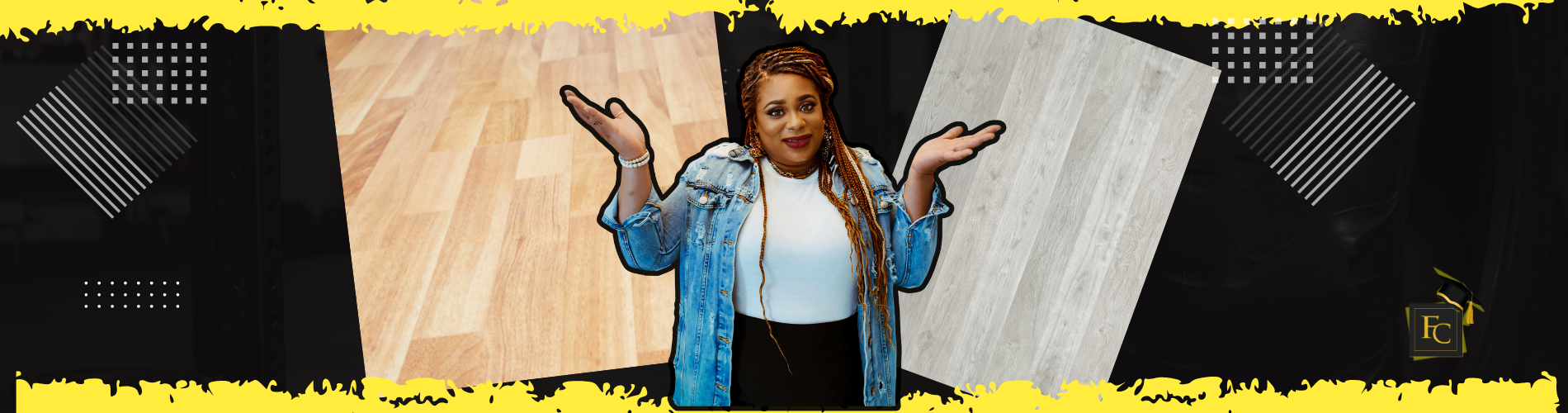
Why do two LVP floors have completely different labels? Two floors can look almost identical, have similar colors and textures, and even fall into the same price range, but one is labeled WPC and the other SPC.
It can suddenly feel like you need a degree in flooring just to make a choice.
You’re not alone. Most homeowners don’t walk into our showroom asking about “core construction.” But after years of hands-on daily installations, we can tell you this: the core matters more than most people realize.
Both WPC and SPC are types of rigid-core luxury vinyl. Both are waterproof and can look great. However, the way they perform in real homes, especially older ones like many in Wilmington, can be very different.
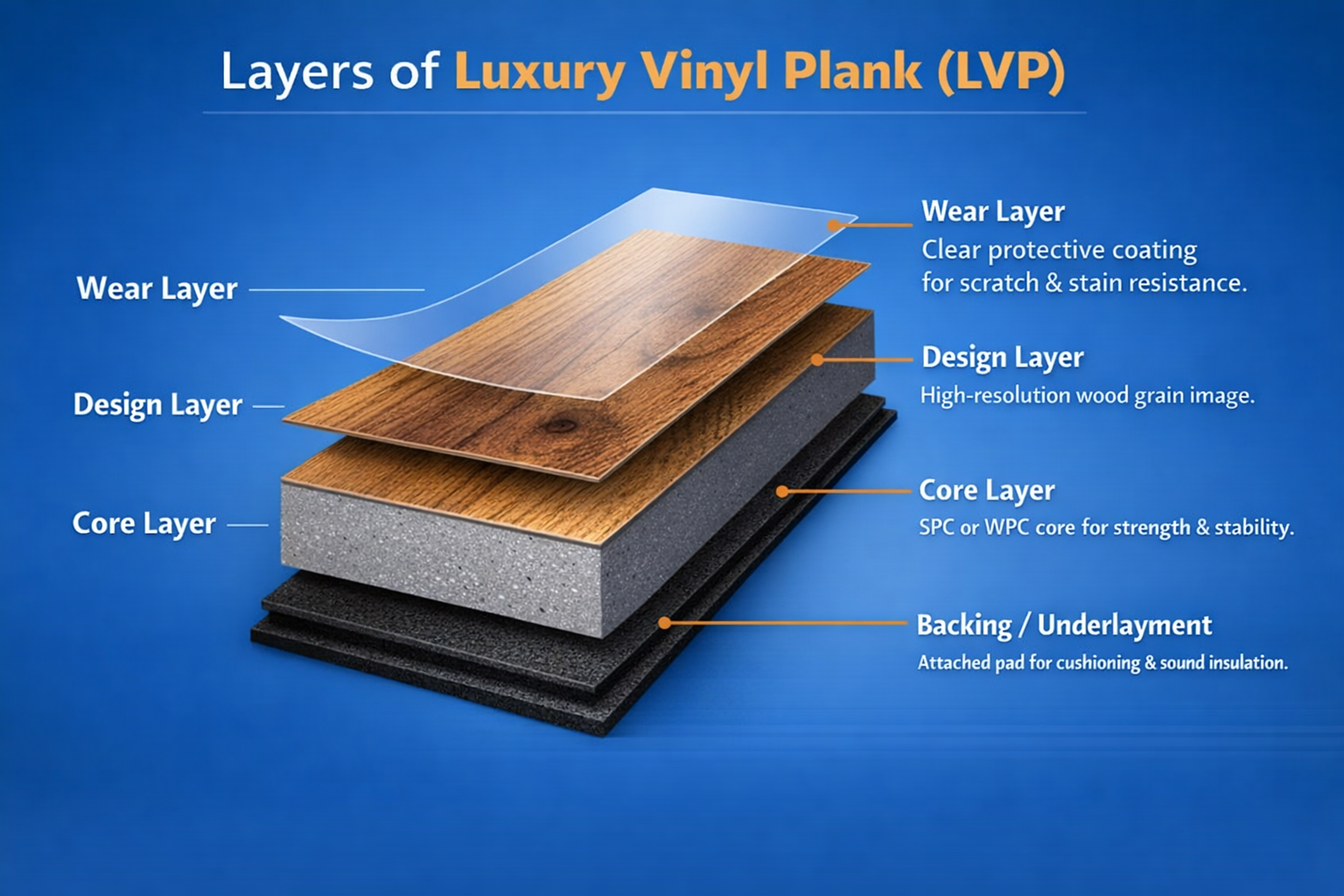
As Wilmington’s go-to luxury vinyl specialists, we’ve spent years watching how these core differences play out in real-world homes. Here’s what homeowners need to know. The core is the structural center of a luxury vinyl plank. It’s what gives the plank rigidity, stability, and locking strength. The wear layer on top protects against scratches. The backing layer helps with installation. But the core determines how the floor handles subfloor imperfections, temperature changes, impact, and daily use. That’s where WPC and SPC diverge. WPC stands for Wood Polymer Core. It’s made from a mixture of plastic polymers and wood-based materials, creating a core that is rigid but slightly flexible. Think of it like the resilient core of a hiking boot, providing enough give to make it comfortable on uneven terrain while still offering strong protection. That flexibility is important. Because WPC has a little "give," it tends to feel warmer and quieter underfoot. Many homeowners describe it as more comfortable to walk on, especially in living rooms, bedrooms, and upper levels. One homeowner mentioned, "It feels like walking on cushioned cork rather than stone," highlighting the added comfort it offers in these spaces. WPC products are also usually thicker than SPC. This extra thickness helps hide minor subfloor imperfections, which we often see in Wilmington’s older homes. Is it as dense as SPC? No. But within residential settings, density isn’t always the deciding factor. SPC stands for Stone Polymer Core. Its core is made primarily from limestone and plastic polymers, resulting in a very dense, rigid plank. This density translates into practical benefits in everyday life. For example, its sturdy structure can reduce dents and damage from rolling office chairs or heavy furniture, making it a suitable choice for areas with such usage. SPC’s biggest strength is its hardness. It resists dents well and handles temperature swings with impressive stability. For that reason, it’s regularly marketed as the more durable option. Because it’s thinner and denser, SPC can feel firmer underfoot. Some homeowners notice more sound transfer unless a high-quality underlayment is used. On paper, SPC sounds like the stronger product, and in some environments, it truly is. But here’s where real-world experience comes in. After installing over 3,000 LVP floors in homes throughout this region, we’ve noticed a consistent pattern. SPC’s rigidity makes it less forgiving. In perfectly flat, properly prepared spaces, SPC performs very well. But in homes where the subfloor isn’t perfectly level, which is very common, SPC is less tolerant of minor imperfections. Since it has very little flexibility, it tends to transfer stress to the locking system. Over time, that stress can lead to joint separation, hollow or clicking sounds, locking mechanism failure, and ultimately increased warranty claims. We’ve seen more claims and callbacks with SPC compared to WPC in residential installations. In our records, we’ve seen significantly more warranty claims with SPC than with WPC — roughly a 3-to-1 difference. This ratio underscores the higher reliability of WPC flooring in typical home settings, making it the safer choice for many homeowners. WPC’s slightly softer core absorbs minor movement and inconsistencies better. That forgiveness matters in real homes, where floors aren’t laboratory-perfect. This is why, based on our experience and not just marketing, we recommend WPC almost exclusively for residential installations. We carry both WPC and SPC products, but our recommendation is based on long-term performance, not margin. This honesty underscores our commitment to objective recommendations, allowing you to trust that our advice is shaped by what serves your best interest. No. SPC has advantages. In commercial settings, extremely high-use environments, or sites with very heavy static loads, its density can be beneficial. But in the average Wilmington-area home, especially properties with less-than-perfect subfloors, we’ve found WPC performs more reliably over time. When we recommend WPC, it’s not because it’s trendier or more profitable. It’s because we’ve seen it lead to fewer long-term issues for homeowners. To help you make an informed decision, consider these quick scenarios: If your priorities include comfort, sound reduction, and lasting dependability over imperfect subfloors, WPC is often the safer choice. WPC's flexibility can offer better comfort, especially in living rooms and bedrooms. If your subfloor is exceptionally flat and you’re installing in a very high-impact area, SPC could make sense. Its density and rigidity are ideal for spaces with heavy furniture or equipment. The right answer depends on your home, not just what’s in the product brochure. One important thing to remember: core construction is only one piece of the equation. Wear-layer thickness, product quality, subfloor preparation, and professional installation all have just as much impact on how your floor performs. A properly installed WPC floor will outperform a poorly installed SPC floor every time. Based on years of installation experience and real warranty data, we recommend WPC for most residential homes in our area. It’s quieter. It’s more comfortable. It’s more forgiving of the subfloor conditions we typically encounter. And it has resulted in fewer long-term performance issues for our customers. That said, we’re always happy to explain both options with you and determine what makes the most sense for your specific space. If you’re unsure which core type best fits your home, the best next step is to see and feel them side by side. If you’re comparing WPC and SPC and want an honest recommendation based on your home’s subfloor and layout, visit our Wilmington showroom. We’ll walk you through both options and explain exactly why we recommend what we recommend.What Is WPC and SPC in Luxury Vinyl Plank (LVP)?
What Is WPC Flooring?
What Is SPC Flooring?
What We’ve Seen After Thousands of LVP Installations
Feature WPC (Wood Polymer Core) SPC (Stone Polymer Core) Core Material Wood dust, plastic polymers, and foaming agents Natural limestone powder and plastic polymers Feel Underfoot Softer, warmer, and cushioned; feels quiet to walk on Harder, colder, and firmer; mimics real tile/stone density Thickness Thicker (typically 5mm to 8mm) Thinner (typically 4mm to 6mm) Subfloor Forgiveness Excellent; hides minor cracks and uneven subfloor dips Low; requires a virtually flawless, perfectly flat subfloor Dent Resistance Good, but prone to minor indentations from extreme weights Outstanding; highly resistant to heavy furniture & impact Best Suited For Residential homes, bedrooms, living rooms, and older subfloors Commercial spaces, high-traffic offices, and flat concrete subfloors Does That Mean SPC Is a Bad Product?
Which LVP Option is Right for You?
Why Installation and Subfloor Prep Matter More Than Core Type In LVP Flooring
Our Recommendation for Wilmington Homeowners
Still Deciding Between WPC and SPC?


Lorem ipsum dolor sit amet, consectetur adipiscing elit. In vitae elementum justo. Curabitur varius dolor a placerat facilisis. Sed ipsum quam, pharetra ut sapien in, scelerisque hendrerit felis. Aliq
Lorem ipsum dolor sit amet, consectetur adipiscing elit. Phasellus aliquet vestibulum diam id dictum. Suspendisse id nibh fringilla, laoreet ipsum ac, ultricies ex.
Lorem ipsum dolor sit amet, consectetur adipiscing elit. Phasellus aliquet vestibulum diam id dictum. Suspendisse id nibh fringilla, laoreet ipsum ac, ultricies ex.
Lorem ipsum dolor sit amet, consectetur adipiscing elit. Phasellus aliquet vestibulum diam id dictum. Suspendisse id nibh fringilla, laoreet ipsum ac, ultricies ex.
Mauris cursus neque pellentesque, mattis sem at, sodales velit. Cras vitae bibendum ex. Pellentesque habitant morbi tristique senectus et netus et malesuada fames ac turpis egestas.
CALL TO ACTIONLorem ipsum dolor sit amet, consectetur adipiscing elit. In vitae elementum justo. Curabitur varius dolor a placerat facilisis. Sed ipsum quam, pharetra ut sapien in, scelerisque hendrerit felis. Aliquam vitae arcu eget leo tincidunt pulvinar.
Try VisualizerLorem ipsum dolor sit amet, consectetur adipiscing elit. In vitae elementum justo. Curabitur varius dolor a placerat facilisis. Sed ipsum quam, pharetra ut sapien in, scelerisque hendrerit felis. Aliquam vitae arcu eget leo tincidunt pulvinar.
Try VisualizerLorem ipsum dolor sit amet, consectetur adipiscing elit. In vitae elementum justo. Curabitur varius dolor a placerat facilisis. Sed ipsum quam, pharetra ut sapien in, scelerisque hendrerit felis. Aliquam vitae arcu eget leo tincidunt pulvinar.
Try VisualizerLorem ipsum dolor sit amet, consectetur adipiscing elit. In vitae elementum justo.
Lorem ipsum dolor sit amet, consectetur adipiscing elit. In vitae elementum justo.
Lorem ipsum dolor sit amet, consectetur adipiscing elit. In vitae elementum justo.
Lorem ipsum dolor sit amet, consectetur adipiscing elit. In vitae elementum justo.
Lorem ipsum dolor sit amet, consectetur adipiscing elit. Phasellus aliquet vestibulum diam id dictum. Suspendisse id nibh fringilla, laoreet ipsum ac, ultricies ex.
Learn More
Lorem ipsum dolor sit amet, consectetur adipiscing elit. Phasellus aliquet vestibulum diam id dictum. Suspendisse id nibh fringilla, laoreet ipsum ac, ultricies ex.
Learn MoreThank you for contacting Carpet One Floor & Home. Your local flooring expert will reach out to you regarding your inquiry.