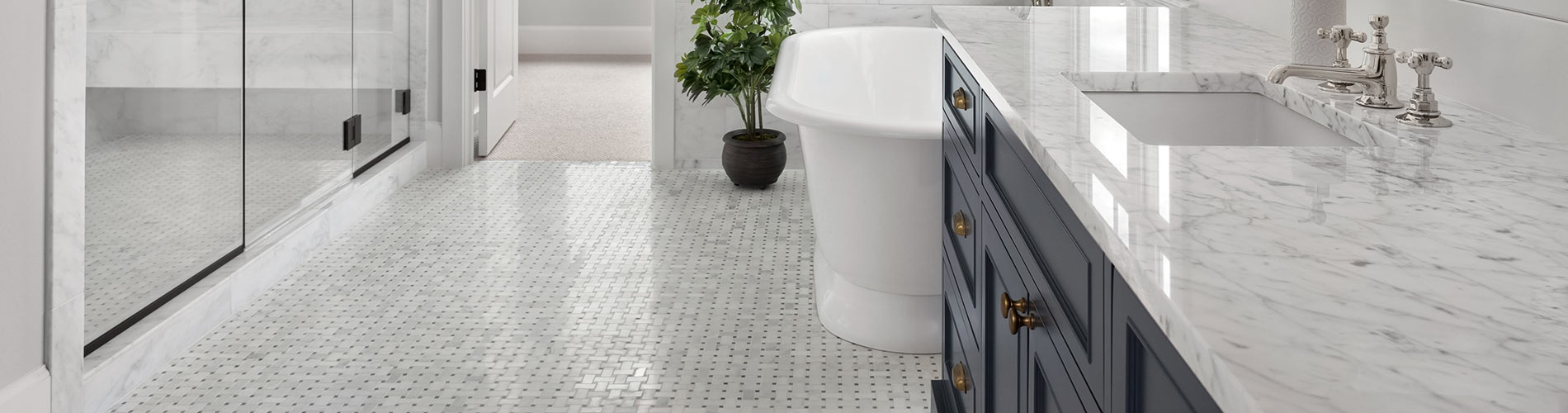
Installing Tile Floors: What Homeowners Need to Know
What Wilmington Home Owners Need To Know
Installing Tile Floors: What Homeowners Need to Know
By Sean Henry, Owner of Floor Concepts · Updated November 3, 2026
Tile is one of the few floors that can outlast the house around it, but only if it's installed right. Most tile problems we see, like cracked tiles, hollow spots, and crumbling grout, trace back to what happened before the first tile went down.
Quick answer: A tile floor installation includes removing the old floor, preparing a flat and stable subfloor, setting the tile in mortar, grouting, and, for most grouts, sealing. Most tile jobs take 2 to 5 days, depending on the scope of the project, and tile runs about $15 to $100 per square foot installed in the Wilmington area, depending on the tile and the prep your floor needs.
At Floor Concepts, we've been installing tile in Wilmington-area homes since 1982. Here's what really happens during a tile installation, how long it takes, and how to plan for it.
Want to see it start to finish? This video follows a real tile job:
Porcelain is the go-to for wet rooms and high traffic. Ceramic is often more affordable and works well in lighter-use areas and on walls.
Porcelain tile is denser and absorbs very little water. Under the industry standard, ANSI A137.1, a porcelain tile has a water absorption of 0.5% or less. Natural stone looks beautiful but needs more sealing and care.
Not sure tile is right for you? Start with Is Tile Flooring a Good Choice for Your Delaware Home?
Always order more tile than the square footage. Cuts, breakage, and pattern layouts use extra. It's also smart to keep a few spare tiles from the same lot in case you ever need a repair, since colors can vary between batches.
Old carpet, vinyl, laminate, or tile comes up first. Removing old tile is the messiest and slowest. Expect noise and dust, and plan to keep the room closed off.
This is the most important step, and the one that separates a tile floor that lasts from one that cracks.
Tile is rigid. If the floor underneath flexes or isn't flat, the tile or grout will crack.
This is also where costs can change. Once the old floor is up, we sometimes find damage or unevenness that has to be fixed first.
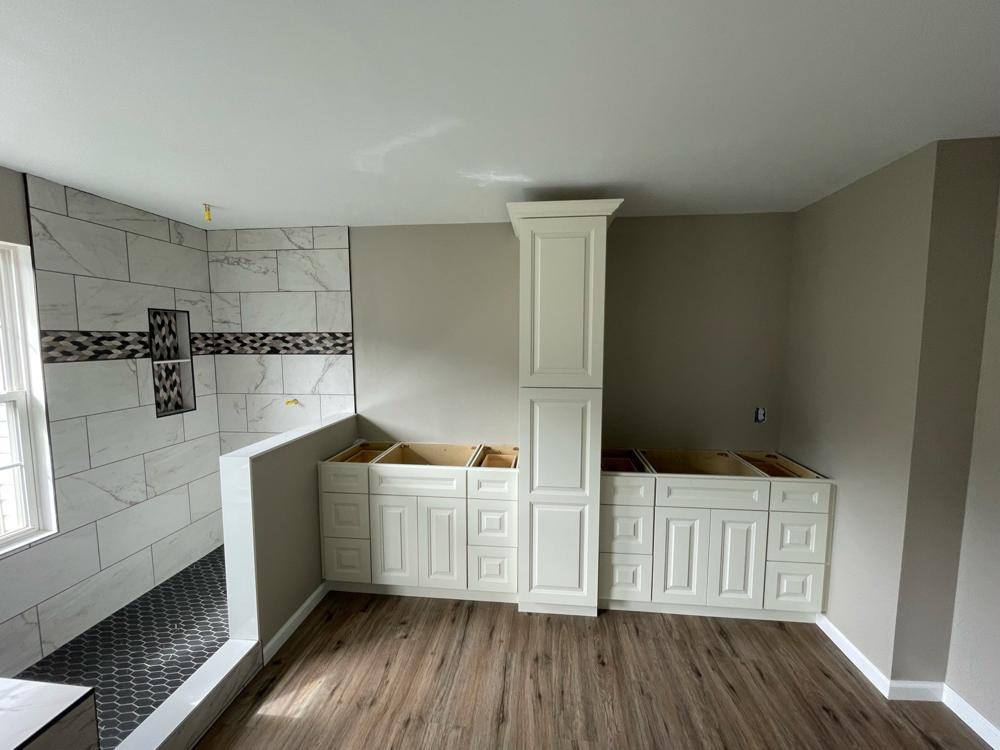
A good installer dry-lays the tile first to plan where cuts will land, so you don't end up with thin slivers at a doorway or along the most visible wall. Large tiles, patterns like herringbone, and diagonal layouts take more planning and more cuts.
Each tile is set in a cement-based adhesive called thinset mortar, with spacers to keep the grout lines even. Larger tiles need extra care so they sit flat with no hollow spots or uneven edges.
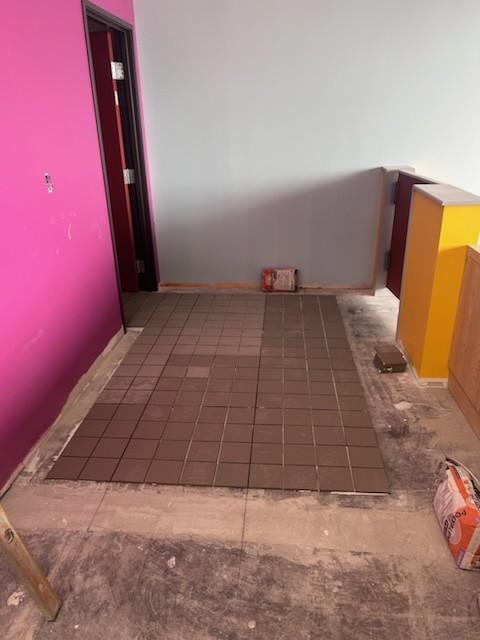
Once the tile is set, you'll need to stay off it while the mortar cures. Your installer will tell you when it's safe to walk on.
Grout fills the joints between tiles. Traditional cement-based grout is porous and usually needs sealing to resist water and stains. Some grouts, like many epoxy grouts, don't need regular sealing.
Ask what grout you're getting and what upkeep it needs. If it needs sealing, plan to reseal over time.
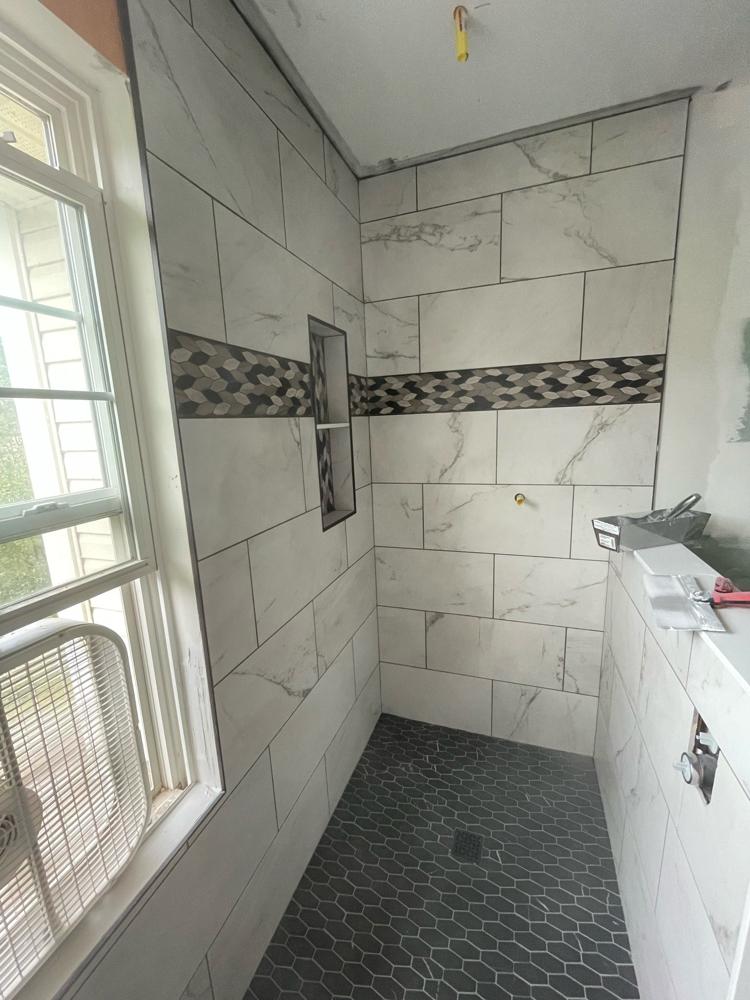
Most tile installations take 2 to 5 days, depending on the scope of the project. A small bathroom floor is at the shorter end. Larger rooms, removing old tile, subfloor repairs, and custom patterns push it toward the longer end.
If you're ordering tile rather than choosing something in stock, allow about a week to 10 days for the material to arrive.
In the Wilmington area, tile flooring generally costs about $15 to $100 per square foot installed. Ceramic is usually the most affordable. Porcelain and natural stone cost more in both materials and labor.
Tile also needs materials other floors don't, like backer board, thinset, grout, trims, and waterproofing. See our Cost of Flooring in Wilmington guide for the full breakdown.
You can, but tile is one of the least DIY-friendly floors. It takes a wet saw, careful subfloor prep, and a lot of patience. Mistakes like uneven tiles, cracked grout, or a flexing subfloor are hard to fix without starting over.
If you want an easier DIY floor, click-lock luxury vinyl plank (LVP) is far more forgiving. If you want tile, a professional installation is usually worth it.
If your timeline is tight, your subfloor needs major work, or your budget is limited, LVP or sheet vinyl can give you a waterproof, tile-look floor in less time and for less money. Compare them in Best Waterproof Flooring for Wilmington, DE Homes.
A tile floor is only as good as what's underneath it.
Choose the right tile, invest in the prep, and let the mortar and grout cure. Do that, and tile will outlast almost any other floor in your home.
Whether or not you're our customer, we're happy to answer your tile questions. Stop by our showroom at 4315 Kirkwood Highway to see our tile selection, or schedule a free in-home estimate and we'll check your subfloor before you choose.
Most tile installations take 2 to 5 days, depending on the scope of the project. Removing old tile, fixing subfloor damage, or custom patterns can add time.
Sometimes. It depends on what's there now, how flat and stable it is, and how much the added height affects doors and transitions. We usually need to see the space first.
For bathrooms, kitchens, and high-traffic areas, porcelain is usually the better pick because it's denser and absorbs less water. Ceramic is often more affordable and works well in lighter-use areas.
It depends on the grout. Traditional cement-based grout usually needs sealing and resealing over time. Many epoxy grouts don't need regular sealing.
Floor Concepts has served Wilmington, Greenville, Hockessin, Newark, Middletown, Bear, Avondale, New Castle, Kennett Square, Landenberg, Smyrna, Dover, and the surrounding areas for over 40 years. Every installation we do is backed by our Lifetime Installation Warranty.
Floor Concepts
4315 Kirkwood Highway
Wilmington, DE 19808
(302) 279-5940
Ready for Real Numbers?
Get a price range for your rooms in two minutes, or compare samples at our Kirkwood Highway showroom.
Get an Instant Price Book a Showroom Visit
More about tile and stone: Tile & Stone Flooring in Wilmington
Thank you for contacting Carpet One Floor & Home. Your local flooring expert will reach out to you regarding your inquiry.